Commercial Solar FAQs
Q: Why should I go for commercial solar panels at my business or nonprofit organization?
A: Well, you have two choices: (1) Continue to pay the utility for all of your fossil-fueled generated electricity, the price for which you have no control; or (2) Go for commercial solar panels and produce your own clean, reliable, cost-effective electricity. Here’s how the two options stack up:
| Two Ways to Power Your Business | |
|---|---|
| Status Quo | - Rates always trend up - The only way to lower your bill is to reduce energy use - Doing nothing comes with a cost |
| Go Solar | - Reduce or eliminate electric bills - Lock in a set, low price - Hedge against rising utility rates - Enjoy a federal tax credit worth 30% of your solar investment - Benefit from accelerated depreciation - Demonstrate sustainable operations |
Q: How long does it take to pay off the investment in my solar electric system?
A: It only takes about 3-5 years, thanks to current solar-friendly policies. Typically, this compares quite favorably with other capital investments, and it definitely compares well against the solar of just a few years ago.
Q: What benefits do commercial solar panels offer for business owners?
A: There are many benefits including:
- Reduced operating costs through lower electric bills
- Revenue from selling solar credits at prices above the retail price of electricity (programs vary by state)
- Increased property re-sale value
- Tax incentives from the federal government
- Tax deduction from the state government (Mass. only)
- Ability to depreciate the system over five years.
Q: How does the depreciation tax deduction work?
A: Solar electric systems are eligible for the five and one half-year Modified Accelerated Cost Recovery System (MACRS). System life is typically much greater than 25 years. This accelerated depreciation on a long life system dramatically increases the after-tax financial return of the project. Please speak to your tax advisor to understand how a depreciation tax deduction would apply to you.
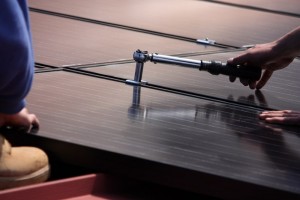

A: Solar electric installations are quite simple — that’s part of their beauty and why they are virtually maintenance-free. The panels are mounted on the roof or ground-mounted on your land, and connected to inverters mounted inside. Click here to view photos of typical business installations.
Q: How long does it take to get solar?
A: The actual installation is quick — depending on the size of the system, it ranges from a few days to a few weeks. The process, including utility interconnection arrangements, takes a bit longer. But don’t worry, we will handle most of the work, and keep you apprised of the timing every step of the way. We will agree on a specific timetable for your project with you.
Q: How long do solar electric systems last?
A: Solar electric systems are designed to last more than 20 years, and most systems will still be producing power in 30-50 years.
 Q: Will I have electricity during a power outage?
A: In the vast majority of cases, no. With a straight grid-tied system without batteries, even on a sunny day when your solar array is producing power, you will not have power in the building if the utility experiences a power outage. This is to protect the linemen working on the utility grid.
Q: Can I cover my roof with solar panels?
A: Solar panels are extremely shade intolerant, so vents, HVAC equipment, and other objects on or near your roof that may shade the panels must be avoided. Often 50-80% of a commercial roof is usable.
Q: Can I put solar panels on a flat rubber membrane roof?
A: Yes, on a membrane roof we install a system that is held to the roof with weight (ballast) to reduce roof penetrations. These systems are designed to keep the solar panels at a low angle (about 10 degrees) to reduce wind loading but still perform better than lying flat on the roof. We ensure that the amount of ballast used is appropriate for the design and the existing structure.
Solar Energy MythBusters: Debunking Common Misconceptions
In this e-book, we will delve into and debunk some of the most common myths and misconceptions surrounding solar energy. As our global society shifts towards cleaner, more sustainable energy solutions, the importance of understanding the true potential of solar power has never been greater. Unfortunately, misinformation and outdated beliefs continue to cloud the conversation around solar energy, leading to confusion and hesitation among those considering making the switch. Whether it’s doubts about its efficiency, affordability, or environmental impact, many are still unaware of the vast benefits solar energy can offer. In the pages ahead, we will separate fact from fiction, helping you navigate through the noise and better understand the reality of solar power. Join us on this enlightening journey as we uncover the truth behind the most prevalent solar myths and set the record straight for a brighter, more sustainable future.