
One of the most common questions homeowners ask when considering solar is simple:
“How long will it take for solar to pay for itself?”
It’s a fair question. Solar is an investment, and most homeowners want to understand when the savings on their electric bills will outweigh the cost of the system.
The answer depends on several factors, including your energy usage, utility rates, system size, and the characteristics of your home. While every situation is different, understanding how solar payback works can help you determine whether solar is a smart long-term investment for your household.
What Does “Solar Payback” Mean?
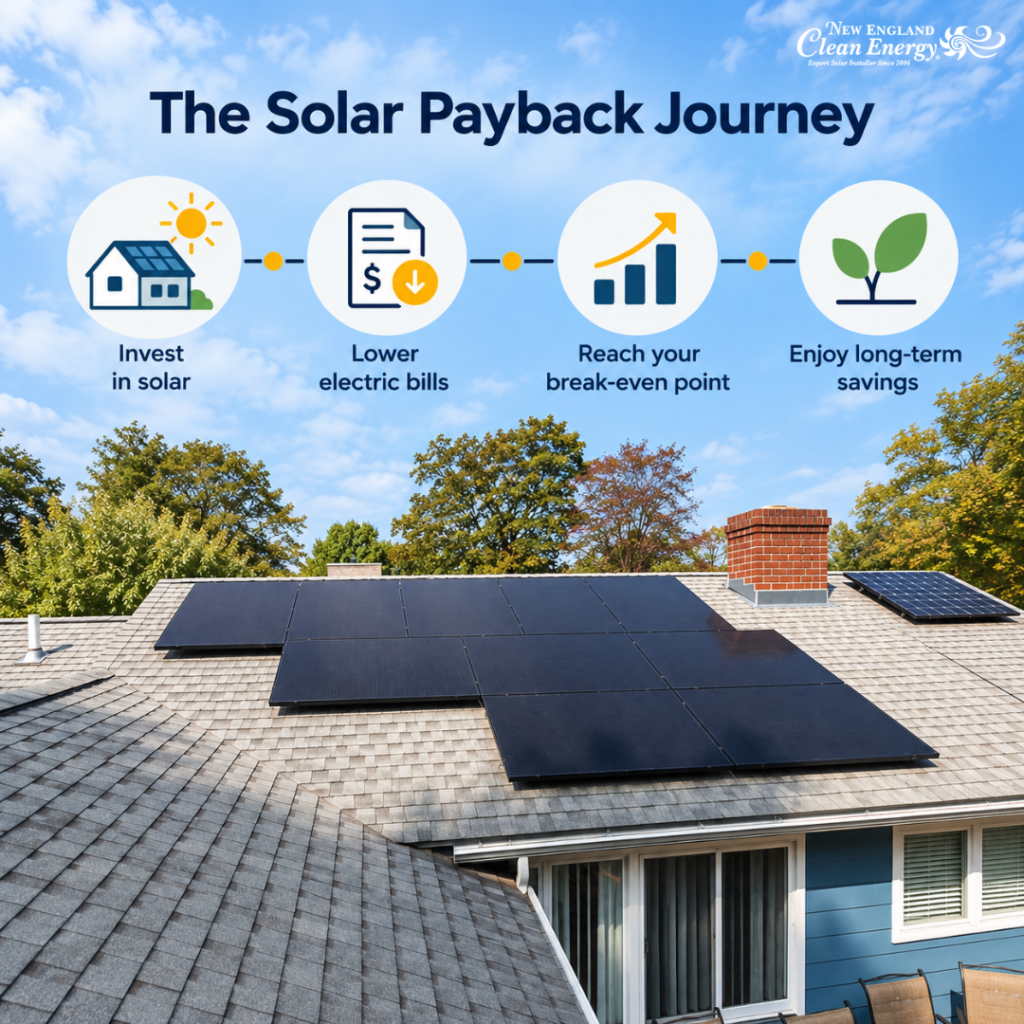
Solar payback refers to the amount of time it takes for the savings generated by your solar system to equal the cost of the investment.
For example, if a solar system saves a homeowner thousands of dollars each year on electricity, those savings gradually offset the initial installation cost. Once the cumulative savings equal the system’s cost, the system is considered to have “paid for itself.”
After that point, future energy savings continue to benefit the homeowner.
Why Solar Payback Varies From Home to Home
There isn’t a single payback period that applies to everyone.
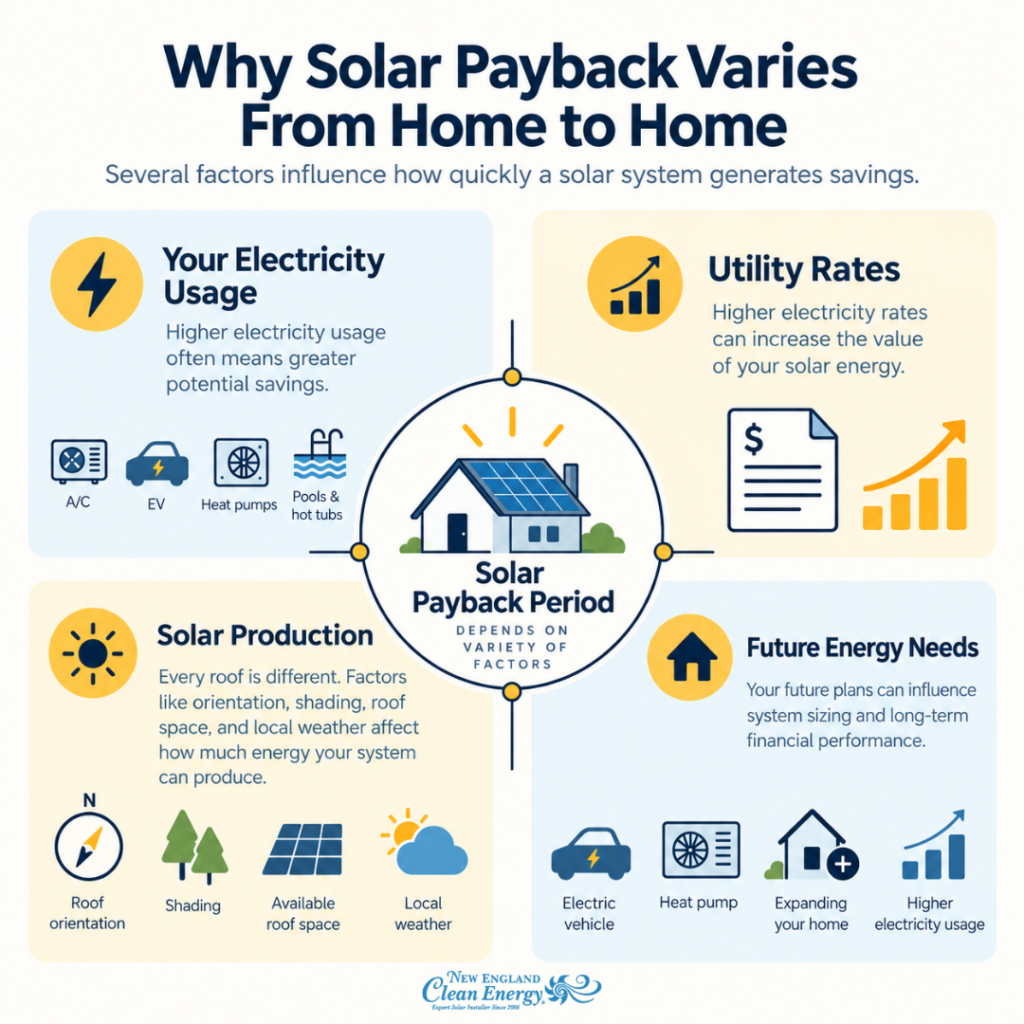
Several factors influence how quickly a solar system generates savings.
Your Electricity Usage
In general, homeowners with higher electric bills often see larger potential savings from solar.
If your home uses significant electricity for air conditioning, electric vehicles, heat pumps, pools, hot tubs, or other energy-intensive equipment, solar may offset a larger portion of your monthly utility costs.
Utility Rates
The cost of electricity plays a major role in solar economics.
New England homeowners have experienced rising utility rates in recent years, making solar more attractive for many households. The more expensive grid electricity becomes, the more valuable solar-generated electricity can be.
Solar Production
Every roof is different.
Factors such as roof orientation, shading, available roof space, and local weather conditions affect how much electricity a system can produce throughout the year.
A well-positioned solar array with strong sun exposure will generally generate more energy and greater savings.
Future Energy Needs
Many homeowners install solar with future plans in mind.
You may be considering:
- Purchasing an electric vehicle
- Installing a heat pump
- Expanding your living space
- Increasing household electricity usage
Planning for future energy needs can influence system sizing and long-term financial performance.
Solar Is More Like Prepaying for Electricity
Many homeowners think of solar as buying equipment. Another way to think about it is prepaying for a portion of your future electricity.
For example, if your utility bills average $250 per month, that’s $3,000 per year spent on electricity. Over the next 25 years, that’s $75,000 spent purchasing power from the utility—and that doesn’t account for future rate increases.
Solar gives homeowners the opportunity to produce much of that electricity themselves, potentially reducing the amount they purchase from the utility over time.
While every solar installation is unique, this example helps illustrate why many homeowners view solar as a long-term investment in energy savings rather than simply another home improvement project.
Looking Beyond Simple Payback
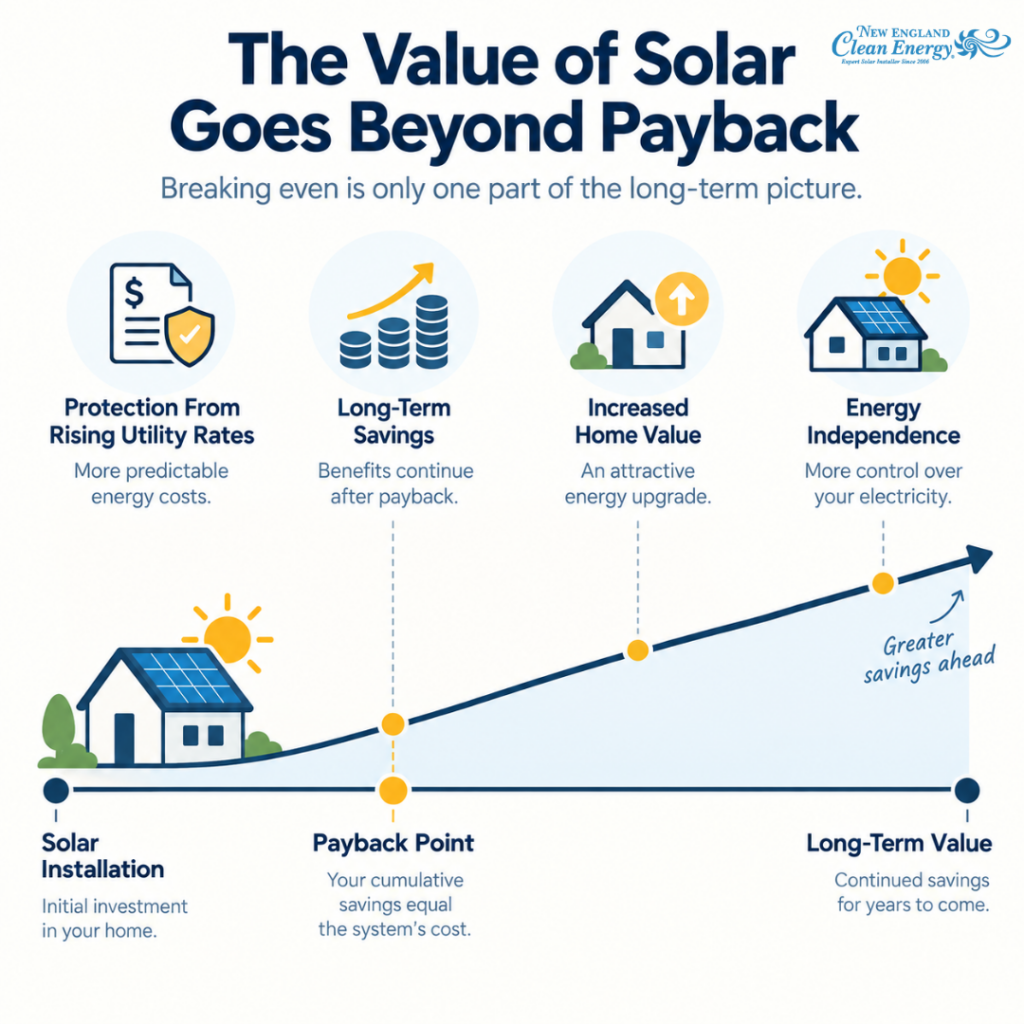
While payback is an important metric, it’s not the only way to evaluate solar.
Many homeowners also consider:
Protection From Rising Utility Rates
Utility rates rarely stay the same.
By generating your own electricity, you reduce your dependence on future rate increases and gain more predictability over your long-term energy costs.
Long-Term Savings
Solar systems continue producing electricity long after they have reached their payback point.
For many homeowners, the largest financial benefits occur after the system has already paid for itself.
Increased Home Value
Many buyers appreciate homes with lower operating costs and energy-efficient upgrades.
While every real estate market is different, solar can be an attractive feature for prospective homeowners.
Energy Independence
For some homeowners, solar isn’t just about economics.
Reducing reliance on utility companies and generating electricity on-site provides peace of mind and greater control over household energy costs.
How Can You Estimate Your Solar Payback?
The best way to estimate solar payback is to evaluate your specific home.
A professional solar assessment can review:
- Your annual electricity usage
- Utility costs
- Roof characteristics
- Solar production potential
- Future energy goals
Using this information, it’s possible to develop a personalized estimate of energy production, utility savings, and projected payback.
Is Solar Worth It in New England?
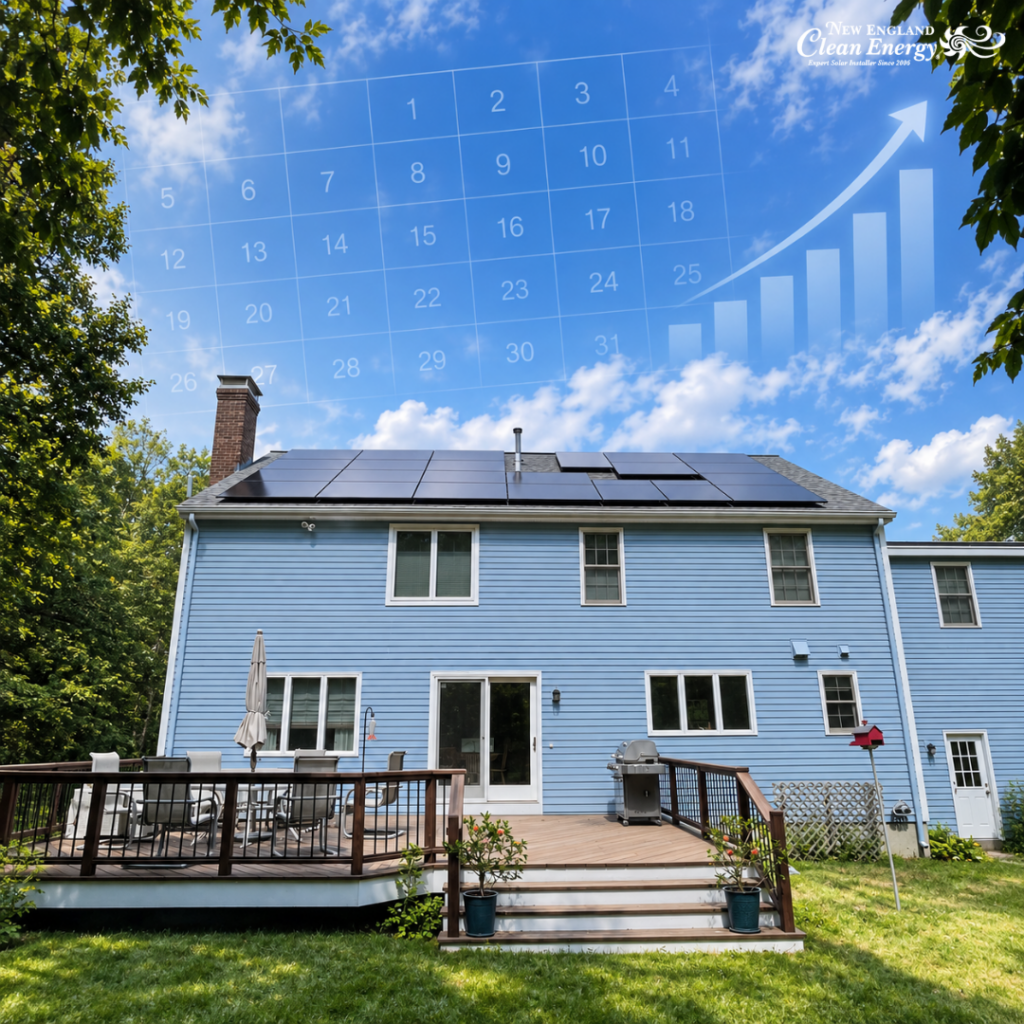
For many homeowners, the answer is yes.
Despite New England’s reputation for snowy winters, the region receives enough sunlight to support strong solar production throughout the year. Combined with relatively high electricity costs, solar can often provide meaningful long-term savings for homeowners.
Every property is different, but many homeowners find that solar offers a combination of financial savings, energy independence, and protection from rising utility costs that makes it worth serious consideration.
Find Out What Solar Could Save You
The best way to understand solar payback is to look at your own home.
New England Clean Energy can evaluate your energy usage, roof conditions, and goals to provide a customized estimate of potential savings and system performance.
Ready to see what solar could do for your home? Contact New England Clean Energy for a free solar consultation today!