
Alternative Mounting for Solar Installations
Great Solar Doesn’t Have to Start on Your Roof.
Not every property is suited to traditional rooftop solar. Explore ground-mounted systems, barn and outbuilding installations, solar carports, and pergola-mounted solar with New England Clean Energy.
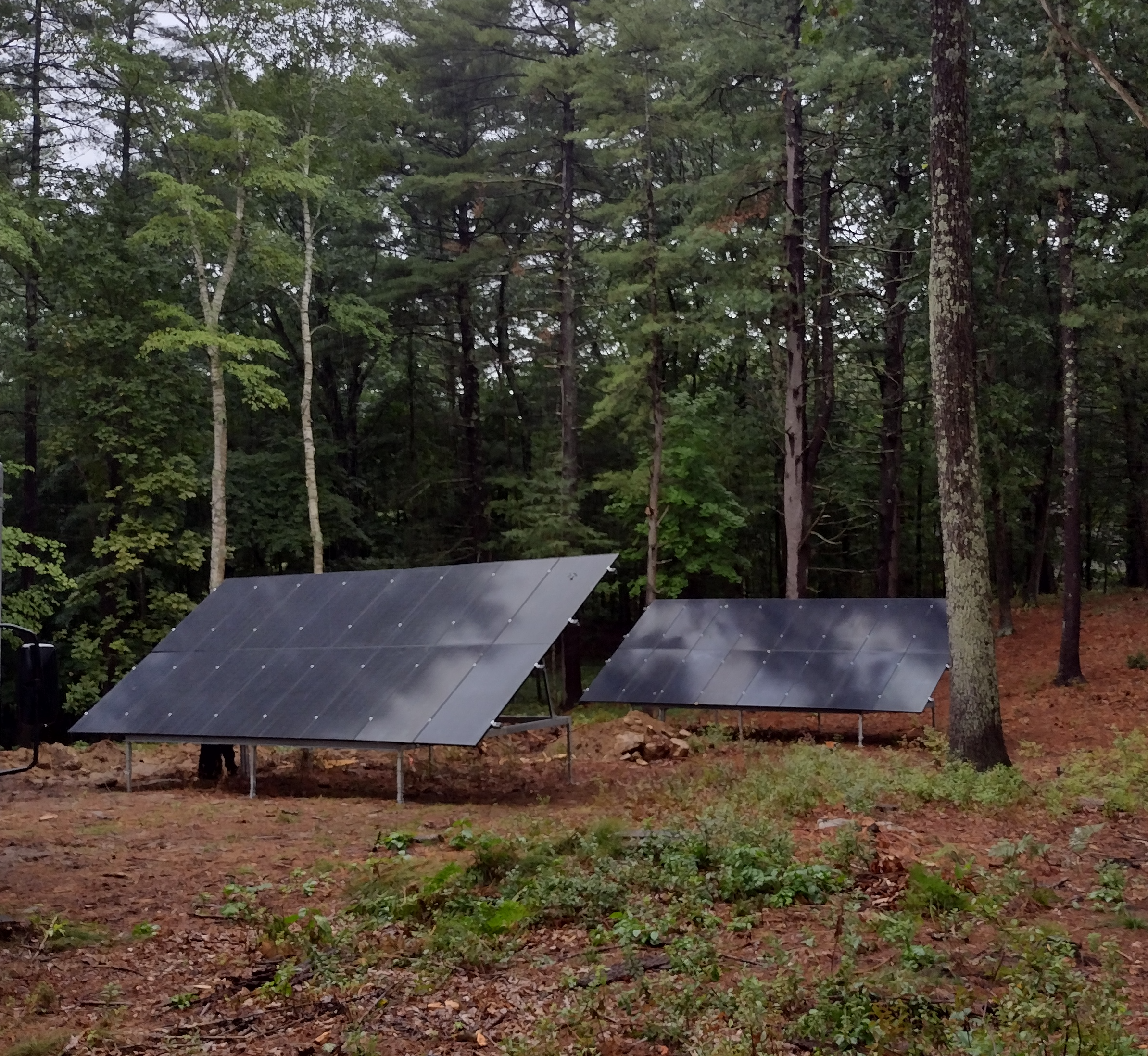
Ground-mounted solar installation in Concord, Massachusetts.
What Are Alternative Solar Panel Mounting Options?
Your home’s main roof isn’t the only place solar panels can go.
Ground-mounted solar, detached garages, barns, carports, and pergolas can provide additional installation possibilities when traditional rooftop solar isn’t the right fit.
These alternatives may be useful for properties with limited roof space, significant roof shading, an older roof, or separate structures with good sunlight exposure.
New England Clean Energy helps property owners evaluate alternative solar panel mounting options based on available space, solar exposure, structural conditions, and project requirements.
Your roof isn’t ideal for solar? That doesn’t automatically rule out your property.
An alternative mounting location could provide another way to generate solar electricity. Feasibility depends on the property, design, approvals, and installation costs.
Four Alternatives to Traditional Rooftop Solar
Each mounting approach has different advantages, site requirements, and design considerations.
Alternative mounting configurations are subject to property suitability, local permits, structural requirements, and New England Clean Energy’s project capabilities.
Why Consider Ground-Mounted Solar?
Ground-mounted solar can be especially appealing when the main roof has limited solar exposure or isn’t ideal for mounting panels.
These installations use dedicated supports anchored according to the project’s site and engineering requirements.
Ground mounts can offer more flexibility in panel orientation and accessibility, although grading, foundations, trenching, and land conditions may increase project costs.
What Makes a Good Ground-Mount Location?
- Suitable land area
- Good year-round sunlight
- Appropriate soil and drainage
- Space for installation access
- Acceptable distance to electrical equipment
- Compliance with setbacks and local rules
Which Solar Mounting Option Fits Your Property?
The best choice depends on your available space, existing structures, and project goals.
| Mounting Type | Potential Fit | Key Consideration |
|---|---|---|
| Ground Mount | Properties with usable open land | Soil, shading, setbacks, and trenching |
| Barn / Garage | Properties with suitable outbuilding roofs | Roof structure, condition, and electrical routing |
| Carport | Driveways and parking areas | Structure, foundations, height, and cost |
| Pergola | Outdoor living or gathering spaces | Structural design and available solar area |
This is a general comparison, not a determination of project suitability.
What Determines Whether an Alternative Solar Installation Is Possible?
A different mounting location may create opportunities, but it also introduces site-specific requirements.
Shading and Orientation
Nearby trees, buildings, seasonal shadows, and available tilt affect potential solar production.
Structural Suitability
Barns, garages, carports, and pergolas must be appropriately designed to support solar equipment and local weather loads.
Land and Site Conditions
Ground slope, soil, drainage, property boundaries, and access influence installation feasibility.
Connection Requirements
Distance to the electrical service, wiring routes, equipment placement, and trenching can affect design and cost.
Permits and Zoning
Setbacks, height limits, local zoning, building permits, and utility approvals may apply.
Installation Budget
Dedicated structures, foundations, excavation, engineering, and electrical work may affect the total project investment.
How Alternative Solar Mounting Projects Work
An initial consultation helps determine which mounting options are worth exploring for your property.
Discuss Your Property and Goals
We begin by learning about your electricity use, property layout, roof conditions, available land, and preferred mounting locations.
Evaluate Site Feasibility
Solar exposure, property conditions, structural needs, utility connections, zoning, and access help determine practical installation options.
Review a Project Proposal
If a feasible option is identified, the proposed system design, equipment, expected production, installation scope, and costs can be reviewed.
Complete the Approved Installation
After necessary approvals, the mounting structure and solar equipment can be installed, connected, and checked according to the approved design.
Exact steps depend on the mounting configuration, project approvals, and installation scope.
Solar Installations Beyond the Main Roof
New England Clean Energy customers have shared their experiences with nontraditional solar mounting locations.
Richard Barrel described a 45-panel solar installation on a detached garage completed in January 2024. He highlighted the design, communication, electricians, and installation experience.
— Richard BarrelAnthony Costello described two solar installations on his property: one in a field and another on a barn. He expressed satisfaction with the installation experience and system reliability.
— Anthony CostelloThese are summaries of customer reviews featured on the original page. Individual results vary.
Creative Solar Solutions With Practical Planning
New England Clean Energy has helped homeowners and businesses explore solar solutions since 2006. We understand that properties differ in size, layout, shading, and available mounting space.
Our approach starts with understanding the property and evaluating feasible installation options rather than assuming the main roof is the only choice.
Personalized Solar Planning
Evaluate different mounting locations and project goals.
Site-Specific Design
Consider solar exposure, structure, electrical needs, and access.
New England Experience
Planning that accounts for regional weather and local requirements.
Local Customer Support
A New England-based team to discuss your solar project.
Do Alternative Solar Mounts Cost More?
They can. Alternative mounting systems may require additional structural materials, foundations, site preparation, trenching, or electrical work compared with a straightforward roof installation.
At the same time, a suitable alternative location may offer better solar exposure or more available space than the main roof. That can affect expected energy production and the project’s overall value.
Comparing project options?
Look beyond the installation price alone. Compare estimated annual production, equipment costs, structural work, maintenance access, and long-term electricity needs before deciding.
Alternative Solar Mounting in New England
New England Clean Energy evaluates qualifying solar projects across its regional territory. Availability depends on the property, mounting approach, and project scope.
Service work is performed during normal weekday business hours. Evening, overnight, and weekend service is not available.
Alternative Solar Mounting FAQs
Can I install solar panels somewhere other than my roof?
Yes. Depending on your property and project requirements, alternatives may include ground mounts, barns, detached garages, carports, and pergolas.
Are ground-mounted solar panels as effective as rooftop solar?
Ground-mounted systems can produce substantial electricity and may allow more flexibility in orientation and tilt. Actual production depends on shading, system design, and site conditions.
How much land is needed for ground-mounted solar?
Land requirements depend on the desired system size, panel layout, setbacks, shading, and installation access. A site evaluation is needed to determine usable space.
Can solar panels be installed on an existing barn or garage?
Potentially. The structure must have suitable roof condition, load capacity, solar exposure, and an appropriate electrical connection.
Can solar panels be installed over a driveway?
Solar carports are one possible approach. They require an engineered support structure and must meet applicable permits, clearances, and site requirements.
Do solar pergolas generate electricity?
Yes, when they include appropriately installed and connected solar panels. Output depends on the available array area, shading, orientation, and electrical design.
Are permits required for alternative solar mounts?
Usually, permits or approvals apply to structural and electrical work. Ground mounts, carports, and pergolas may also involve local zoning and setback rules.
Can I add a ground-mounted array to my existing rooftop solar system?
In some cases. An additional array may be possible, depending on equipment compatibility, electrical capacity, utility interconnection rules, and property suitability.
Are alternative solar installations more expensive?
They may be. Foundations, structures, excavation, trenching, and electrical routing can add cost. A custom proposal helps compare mounting options and expected solar production.
Explore Related Services
Find the Right Place for Your Solar Panels.
Whether you’re considering a ground-mounted array, a barn or garage installation, or another alternative mounting approach, New England Clean Energy can help you explore what’s possible for your property.
Schedule a Free Solar ConsultationPrefer to call? 978-567-6527 | Email Our Team