


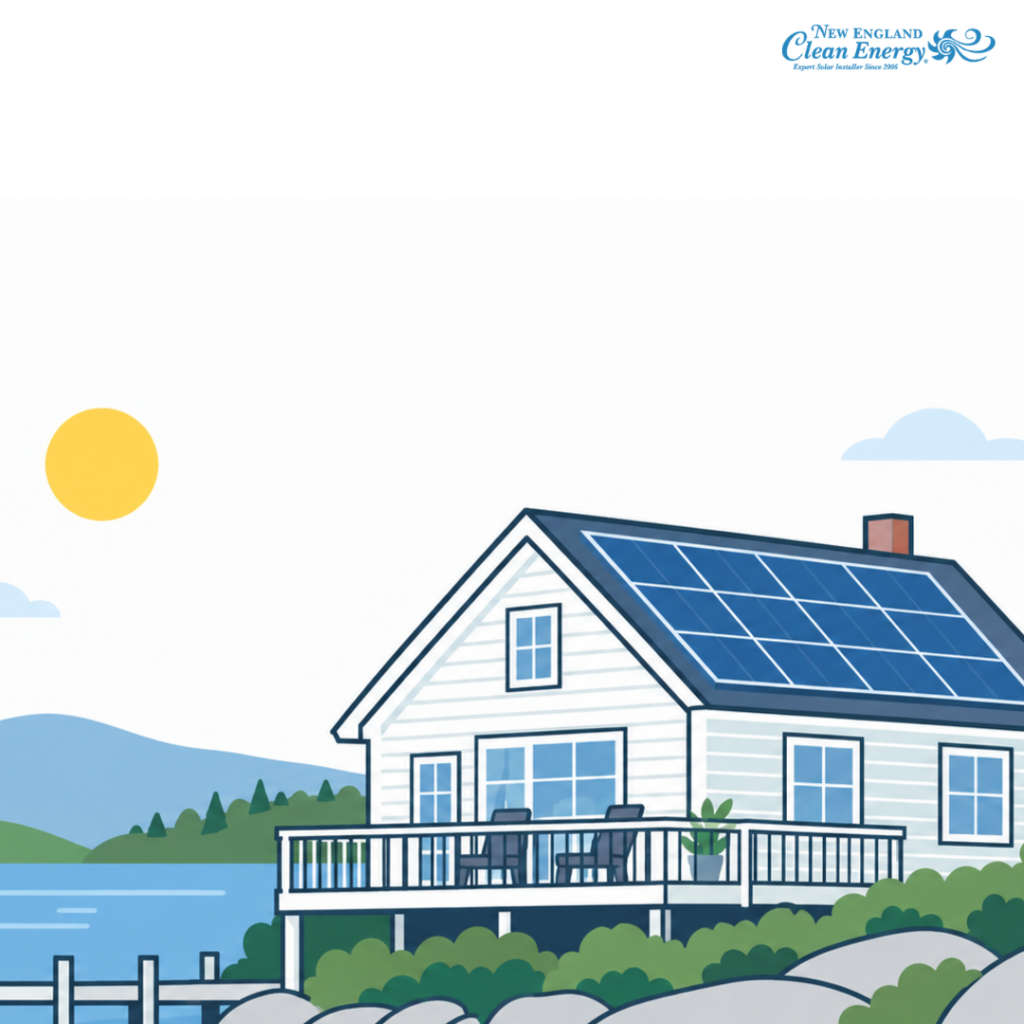


Owning a second home comes with plenty of advantages—a place to escape for the summer, a vacation property that generates rental income, or a family home that’s been passed down through generations.
But it also comes with something less exciting: another utility bill.
Whether it’s a lake house in New Hampshire, a coastal property in Rhode Island, or a rental home elsewhere in New England, energy costs can add up quickly across multiple properties. And even when you’re not there, many homes continue to consume electricity every day.
That’s one reason more homeowners are exploring solar—not just for their primary residence, but for vacation homes and investment properties as well.
Your Second Home Uses More Energy Than You Think

Many homeowners assume that because they only use a property part of the year, energy costs must be relatively low.
In reality, many second homes continue using electricity year-round.
Refrigerators stay plugged in. Security systems remain active. Sump pumps, dehumidifiers, internet equipment, and heating systems often continue running even when the house is vacant.
Over time, those ongoing energy expenses can become surprisingly significant.
Solar can help offset a portion of those costs while providing more predictable energy expenses for years to come.
Vacation Homes Often Have Higher Seasonal Energy Use

When you’re enjoying your second home, energy usage often increases dramatically.
Air conditioning systems run longer during hot summer months. Guests charge devices, cook meals, use hot water, and spend more time at the property than they might at home.
For homeowners who spend extended periods at a vacation property, electric bills can quickly rival—or even exceed—those of a primary residence.
A properly designed solar system can help offset that usage and reduce dependence on utility rate increases.
Solar Can Help Control Operating Costs
One of the biggest benefits of solar is predictability.
Utility rates have steadily increased across New England over the years, making it difficult for homeowners to accurately forecast future energy costs.
Solar allows homeowners to generate their own electricity and reduce exposure to future rate increases. For those managing expenses across multiple properties, that predictability can be especially valuable.

Rental Properties May Benefit Too
If you own a rental property and are responsible for some or all of the utility costs, solar can help reduce ongoing operating expenses.
Even if tenants pay their own electric bills, solar can be an attractive feature that helps differentiate a property from others on the market.
As energy costs continue to rise, many renters and buyers appreciate homes with lower utility expenses and energy-efficient features.
Potential Property Value Benefits
Many homebuyers view solar as a long-term asset.
Lower utility costs, reduced dependence on the grid, and modern energy technology can make a property more attractive to prospective buyers.
While every real estate market is different, energy efficiency is increasingly becoming a factor that homeowners consider when evaluating a property.
Is One of Your Properties a Good Candidate for Solar?

Not every home is ideal for solar, but many homeowners are surprised to discover that a second home may actually be a better fit than their primary residence.
A newer roof, better sun exposure, fewer trees, or higher electricity usage can all make a vacation home or investment property an excellent candidate for solar.
The best way to know is to evaluate the property and understand its solar potential.
Explore Your Options
If you own more than one property, solar may be worth considering as part of your long-term strategy for managing energy costs.
Whether it’s a vacation home, rental property, or family retreat, solar can help reduce utility expenses, provide more predictable energy costs, and add value over time.
Curious whether one of your properties is a good fit? Our team at New England Clean Energy can help you evaluate your options and determine whether solar makes sense for your goals.
Schedule a free consultation today.
If you liked this article, you may also like:
Why Are You Getting a New Electric Meter? What Massachusetts Homeowners Should Know
When Does Solar Pay for Itself? Understanding Solar Payback in New England
What’s the Best Way to Pay for Solar Now That the Federal Tax Credit Has Ended?