
Short answer: yes, your electric bill will likely go up. But that’s only part of the story. The more important question is: Will your total energy costs go up or down? In most cases across New England, homeowners see overall savings, even though electricity usage increases.
Why Your Electric Bill Goes Up
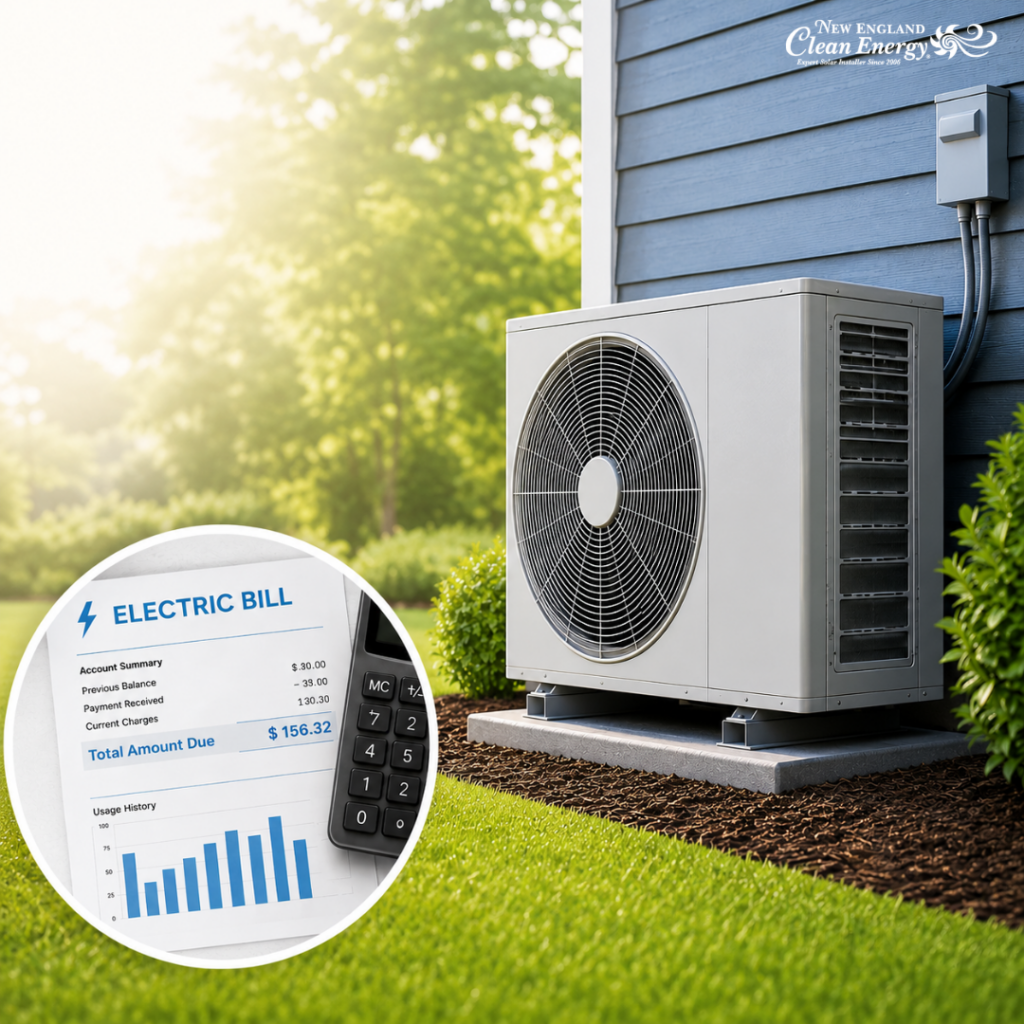
Heat pumps run on electricity instead of fossil fuels like oil, propane, or natural gas.
So when you install one, you’re essentially shifting your energy usage:
- Less oil, propane, or gas
- More electricity
That means your electric bill increases, but you’re also reducing or eliminating another major energy expense.
The Bigger Picture: Total Energy Costs
Let’s break it down simply.
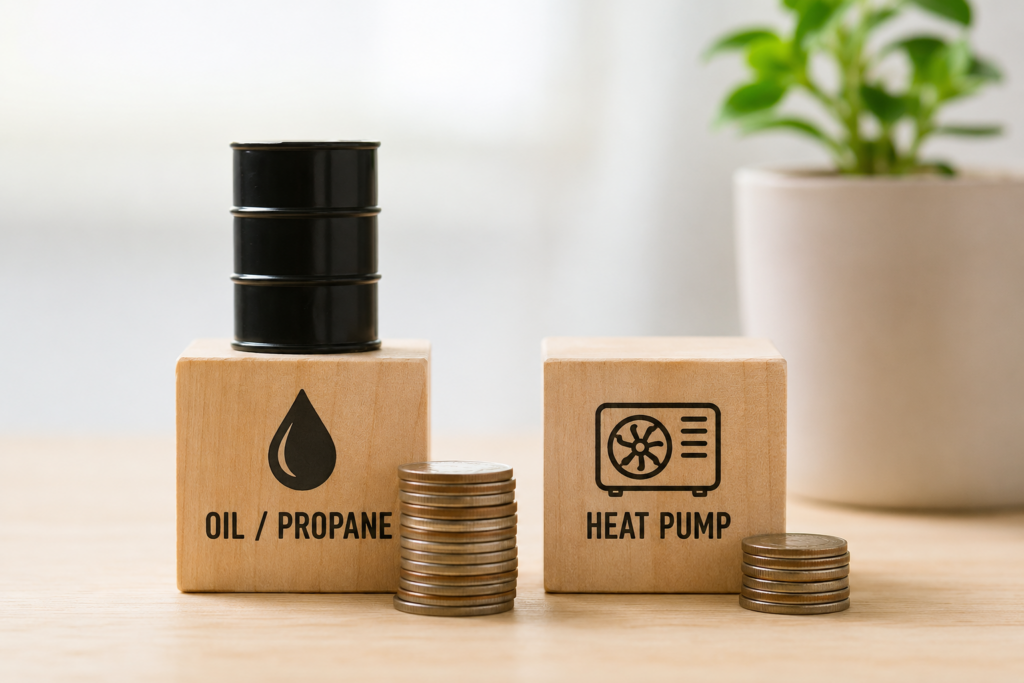
Before a heat pump:
- Heating oil or propane delivery bills
- Electric bill for general usage
After a heat pump:
- Little to no oil or propane
- Higher electric bill
What matters is the combined total.
Because heat pumps are so efficient, they typically:
- Deliver 2–3 times more heat energy than the electricity they use
- Cost less per unit of heat than oil or propane in many cases
Why Heat Pumps Are So Efficient
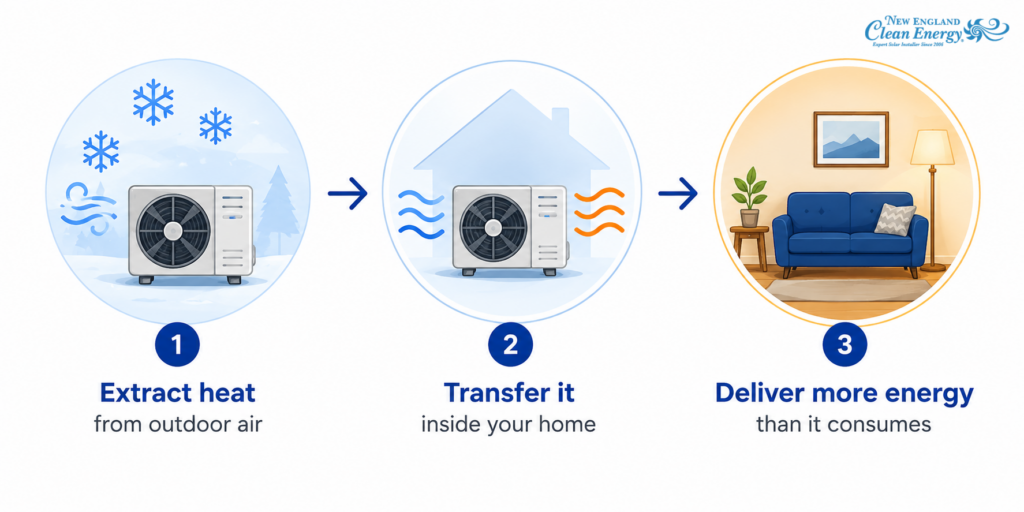
Unlike traditional systems that generate heat, heat pumps move heat.
Even in cold New England winters, modern cold-climate systems:
- Extract heat from outdoor air
- Transfer it inside your home
This is why they can deliver more energy than they consume.
Here’s a simplified scenario:
Before heat pump:
- Oil heating: $3,000/year
- Electric: $1,200/year
- Total: $4,200
After heat pump:
- Electric: $2,400–$2,800/year
- Oil: $0–$500 (backup use)
- Total: $2,400–$3,300
Even though electricity increased, total costs decreased.
What Impacts Your Actual Costs?
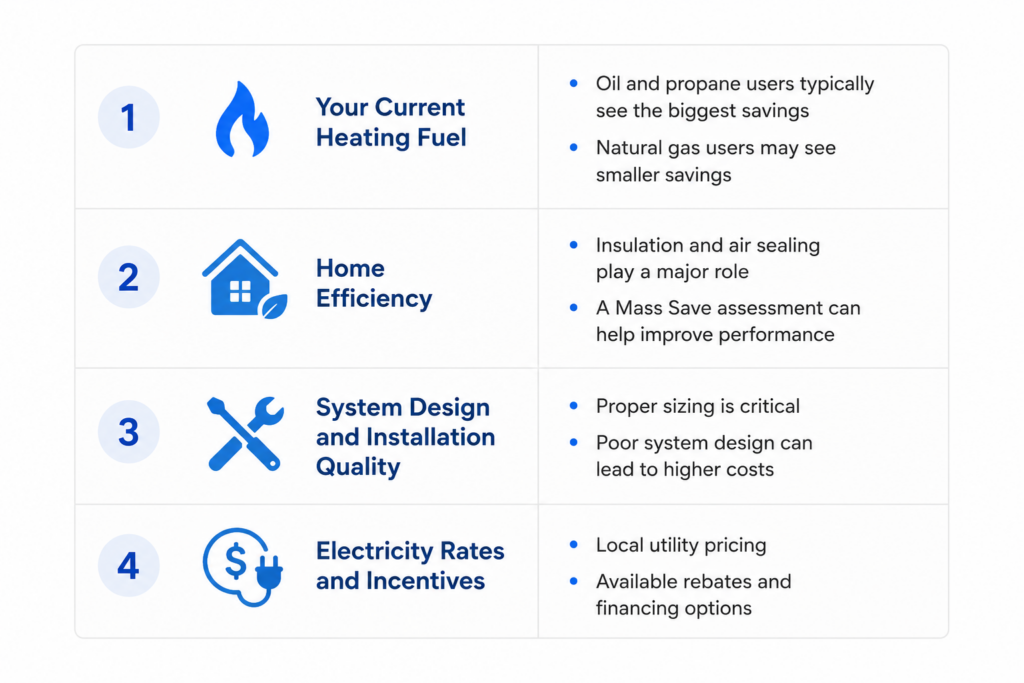
Every home is different. Your results depend on:
What About Summer?
Heat pumps also provide cooling.
That means:

- No need for a separate AC system
- Often more efficient cooling than traditional central air
Many homeowners see little to no increase in summer cooling costs.
The Role of Solar
If you pair a heat pump with solar:
- Your electric bill can be reduced significantly or eliminated
- Heating and cooling costs become more predictable
- You gain protection from rising energy rates
This combination is a key part of home electrification.
So, Will a Heat Pump Raise Your Electric Bill?
Yes. But focusing only on your electric bill misses the full picture.
For most homeowners:
- Electric bills go up
- Fuel costs go down
- Total energy costs go down
The Bottom Line
A heat pump changes how your home uses energy. Instead of relying on fossil fuels, you shift to a more efficient electric system. In most cases, that leads to lower overall costs, improved comfort, and a path toward long-term energy savings.
Curious What It Would Look Like for Your Home?

Every home is different, and the numbers can vary.
If you want to understand:
- Your projected electric usage
- Expected savings
- System sizing and options
Schedule a free consultation here.
If you liked this article, you may also like:
New Home Battery Incentives Are Expanding Across New England—Here’s What Homeowners Need to Know
Why Are Electricity Rates Rising—and What Does AI Have to Do With It?