
How Does Solar Energy Work?
How Does Solar Energy Work?
From sunlight hitting your roof to electricity powering your home, solar energy is simpler than you might think.
Learn how solar panels work, where the electricity goes, and how a solar energy system can help you take greater control of your energy future.
From Sunlight to Electricity in Four Simple Steps
Solar energy systems convert sunlight into electricity that can help power your home or business. Here’s how the process works.
1. Sunlight
Sunlight reaches the solar panels installed on your roof or property.
2. Solar Panels
Photovoltaic cells transform sunlight into direct current electricity.
3. Inverter
An inverter converts DC electricity into usable AC electricity.
4. Your Home
Electricity flows into your home’s electrical system to power devices.
Most residential solar systems remain connected to the electric grid.
See How Solar Energy Works
Prefer a visual explanation? Watch our educational video to learn how solar energy moves from panels to your property.
How Does Solar Energy Work? | New England Clean Energy
How Do Solar Panels Turn Sunlight Into Power?
Solar panels contain photovoltaic (PV) cells, typically made from silicon. These cells are designed to turn sunlight into electricity.
When sunlight reaches the cells, its energy causes electrical charges to move through the material, producing an electric current.
This process is known as the photovoltaic effect. The electricity produced by solar panels is direct current (DC) electricity.
A solar inverter then converts that electricity into alternating current (AC), the type of electricity used by most household appliances.
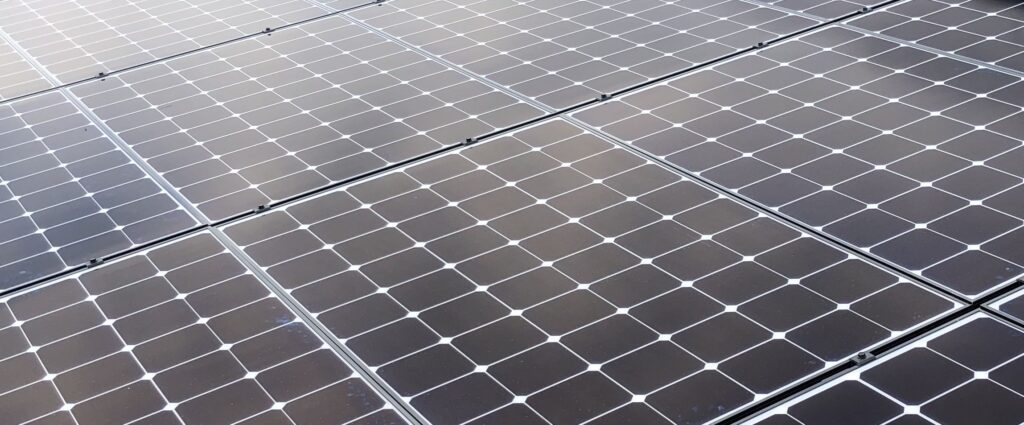 Solar installation in Carlisle, MA.
From DC Electricity to AC Electricity
Solar panels produce DC power, but your home and the electric grid primarily use AC power.
What Does a Solar Inverter Do?
Solar panels are only one component of a complete solar energy system.
Inverters convert the DC electricity generated by panels into AC electricity that can be used throughout your home or business.
Depending on your property’s needs, a solar installation may include microinverters, string inverters, or other compatible equipment.
The right system configuration depends on roof conditions, shading, electrical requirements, and your energy goals.
From Solar Panels to Your Rooftop
Once manufactured, solar panels are ready to become part of a professionally designed energy system.
For residential installations, panels are generally mounted on a roof or ground-mounted structure positioned to receive suitable sunlight.
New England Clean Energy evaluates property conditions, available roof space, shading, and energy usage when developing a solar installation plan.
Proper system design helps ensure the equipment is installed safely and positioned for long-term performance.
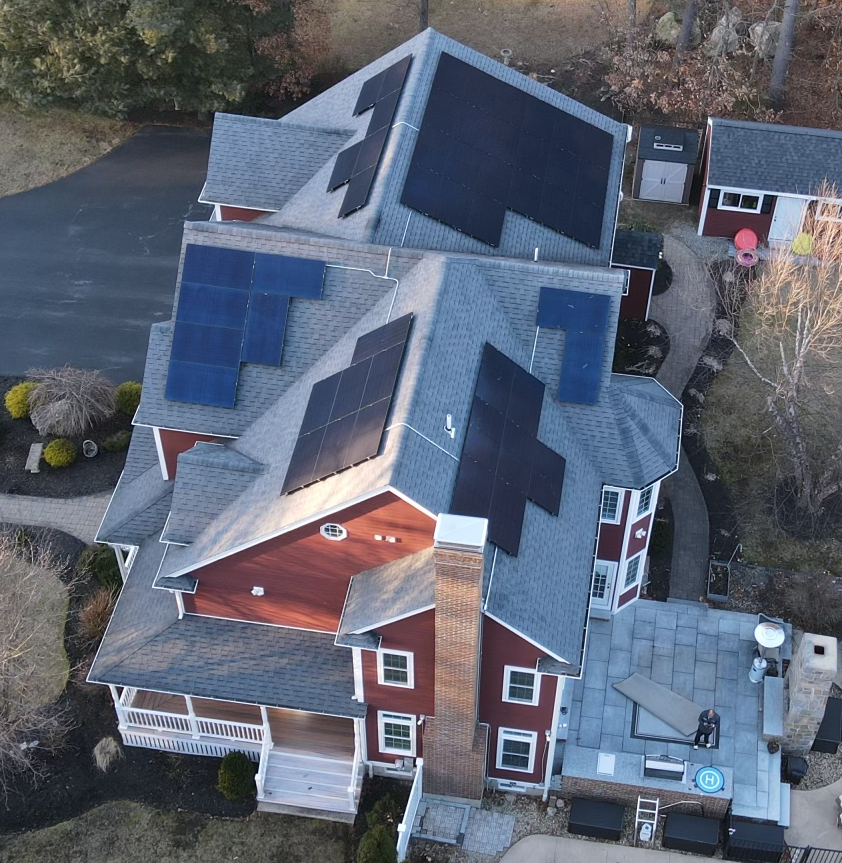 New England Clean Energy
rooftop solar project in
North Reading, MA.
What Happens to the Electricity You Generate?
Your solar energy system works alongside your electrical system and, in most cases, your utility connection.
When the Sun Is Shining
Solar-generated electricity can help power your home, reducing the amount of electricity purchased from your utility.
When You Produce Extra Energy
Unused electricity may be exported to the grid, depending on your system and utility requirements.
When Solar Production Is Low
Your property can continue using grid electricity at night or whenever solar production isn’t enough to meet demand.
What Is Net Metering?
In qualifying utility programs, solar customers may receive bill credits for electricity exported to the grid.
These arrangements are often referred to as net metering or net billing. Specific rules, compensation, and eligibility vary by state and utility.
Use More of the Energy You Produce
With compatible battery storage, solar-generated electricity can be saved for later use.
Can You Store Solar Electricity?
Yes! Battery storage gives homeowners and businesses more options for using the electricity their panels produce.
Instead of immediately exporting unused electricity, a compatible battery system can store energy for use at another time.
Depending on its configuration, a battery may provide backup electricity during a power outage or help manage energy consumption.
Standard grid-tied solar systems generally shut down during a power outage. Backup operation requires compatible equipment and an appropriately configured system.
Explore Solar Battery Options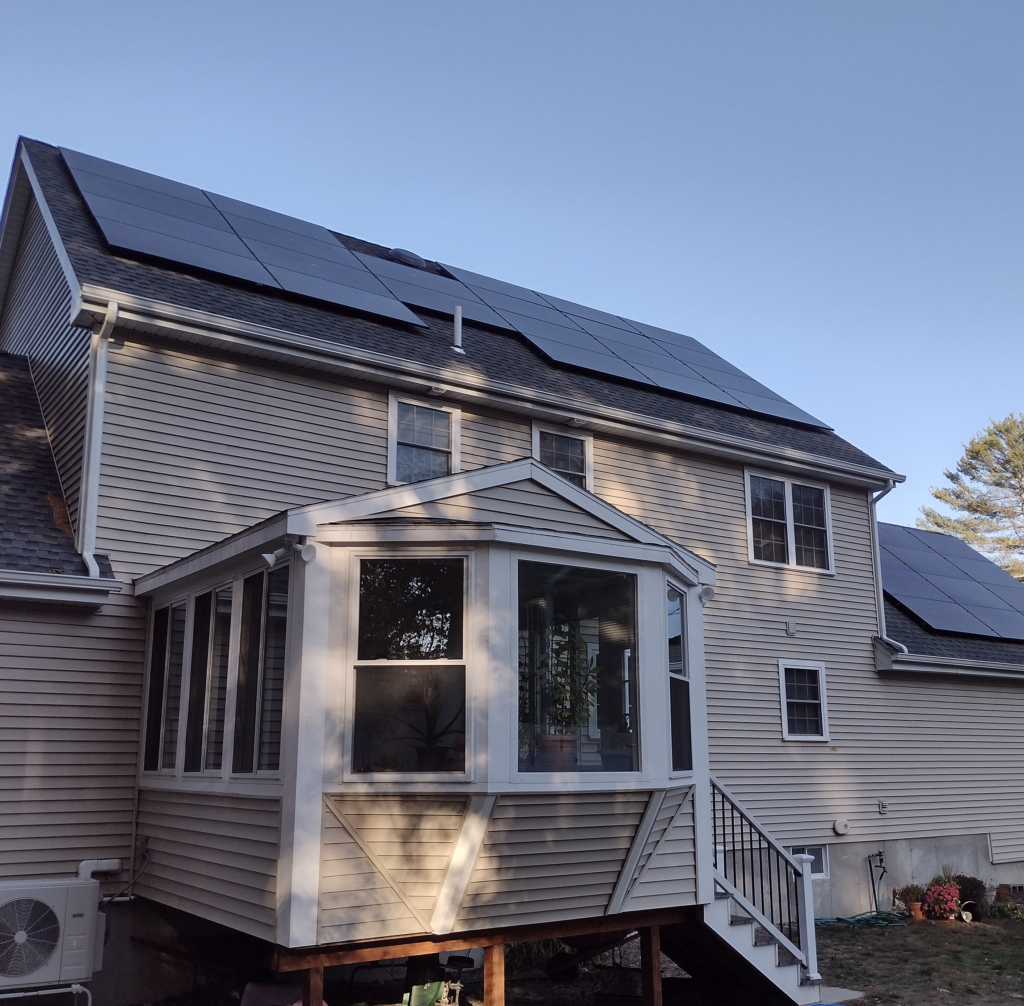 Residential solar installation
by New England Clean Energy
in Burlington, MA.
Do Solar Panels Work in Cold Weather?
Yes. Solar panels generate electricity using sunlight, not heat.
That means solar panels can continue producing electricity during cold New England weather.
Although shorter winter days, snow coverage, and shading can affect electricity production, a well-designed system can generate energy throughout the year.
Your property’s orientation, roof conditions, and exposure to sunlight are important factors in estimating production.
Explore the Benefits of Solar →How Does a Solar System Get Installed?
Before your solar system can begin generating electricity, several important steps ensure everything is designed, installed, and connected properly.
Evaluation & Design
We review your electricity usage, roof conditions, property characteristics, and solar potential.
Permits & Installation
The project moves through required approvals before equipment is installed and electrical connections are completed.
Inspection & Activation
Required inspections and utility approvals are completed before your system receives permission to operate.
How Do You Know Your Solar System Is Working?
Modern solar energy systems often include monitoring software that allows owners to review their system’s electricity production.
These monitoring tools can help identify changes in system performance and may provide alerts when equipment requires attention.
Routine upkeep, addressing performance issues when needed, and understanding system monitoring can help support long-term operation.
Supporting Your Solar Investment
- Track system production with available software
- Review equipment alerts when they occur
- Address maintenance or service needs
- Understand seasonal changes in production
New England Clean Energy is committed to helping customers understand their solar systems and available service options.
Solar Energy FAQs
Do solar panels work on cloudy days?
Yes. Solar panels can generate electricity when sunlight passes through cloud cover, although production is generally lower than on clear, sunny days.
Do solar panels generate electricity at night?
No. Solar panels need sunlight to generate electricity. At night, a grid-connected property generally uses utility electricity or energy stored in a battery.
Will solar panels work during a power outage?
Standard grid-tied solar systems typically shut down during a power outage for safety. Compatible battery storage and backup equipment may allow designated circuits to remain powered.
How long do solar panels last?
Modern solar panels are commonly designed to operate for 25 years or longer. Their output gradually decreases over time, and warranty terms depend on the manufacturer.
Can solar power my entire home?
Depending on your roof, available space, electricity usage, and local utility rules, a solar system may be designed to offset a substantial portion of your annual electricity consumption.
Ready to Put Solar Energy to Work for You?
Understanding how solar works is the first step. Let New England Clean Energy help you explore whether solar is right for your home or business.
Schedule Your Free Consultation Or Call 877-886-8867