
Rhode Island continues to offer some of the strongest solar incentives in the region—and for 2026, the Renewable Energy Fund (REF) and Renewable Energy Growth (REG) Program updates bring both stability and important timing considerations.
If you’re considering solar this year, here’s what’s changed—and how to take advantage of these programs before funding runs out.
REF Incentives for 2026: What’s Staying the Same
For 2026, Rhode Island’s Renewable Energy Fund (REF) is keeping incentive levels consistent across all three funding rounds. That’s good news for homeowners and businesses looking for predictability when planning a project.
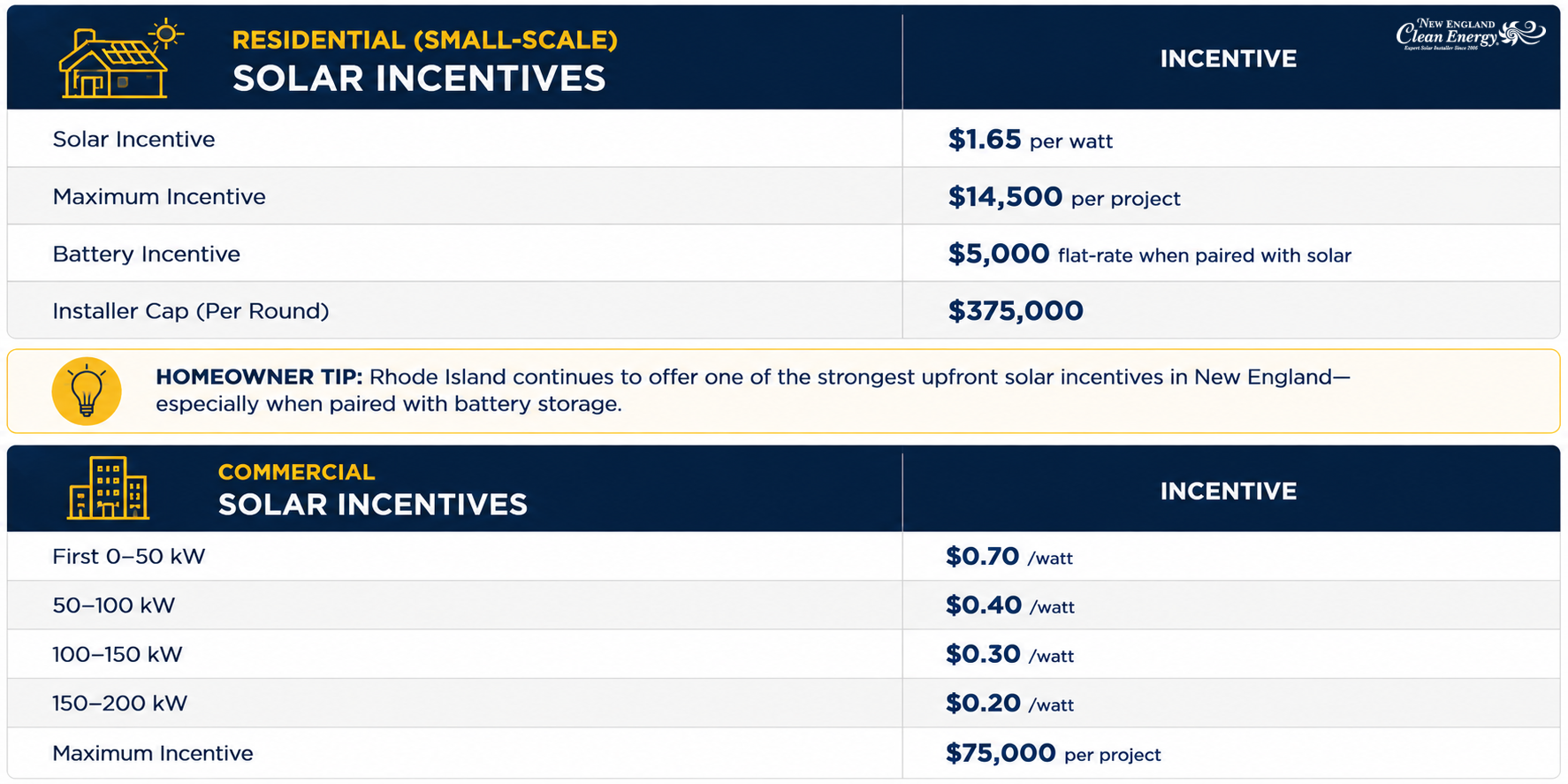
Residential (Small-Scale) Solar Incentives
- $1.65 per watt
- Maximum incentive: $14,500 per project
- Battery incentive: $5,000 flat rate when paired with solar
- Installer cap per round: $375,000
For homeowners, this remains one of the most valuable upfront incentives available in New England—especially when paired with battery storage.
Commercial Solar Incentives
Commercial incentive levels also remain unchanged:
- $0.70/watt for first 0–50 kW
- $0.40/watt for 50–100 kW
- $0.30/watt for 100–150 kW
- $0.20/watt for 150–200 kW
- Maximum incentive: $75,000 per project
Additional incentives for commercial battery storage and solar carports are expected to be announced later in the year.
2026 REF Funding Rounds: Timing Matters
While incentive levels are stable, funding is limited—and timing is critical.
Round 1 (26-1)
- Small Scale: Opened May 1 at 9 AM (first come, first served until funds are gone)
- Commercial: Opened May 1–May 15
Round 2 (26-2)
- Small Scale: July 17
- Commercial: July 31
Round 3 (26-3)
- Small Scale: October 16
- Commercial: October 23
For homeowners especially, Round 1 tends to fill quickly. If you’re serious about going solar in 2026, planning ahead is key.

 What This Means for Rhode Island Homeowners

The 2026 updates reinforce a few key takeaways:
- Incentives remain strong — especially for residential solar and solar + battery systems
- Funding is limited — early planning increases your chances of securing REF incentives
- Battery storage continues to gain value — with dedicated incentives and growing interest in energy independence
For many homeowners, combining REF incentives with long-term savings from solar makes this one of the most cost-effective times to install.
What This Means for Businesses
For commercial projects, the opportunity is still strong—but planning is essential:
- Incentive levels remain competitive for projects up to 200 kW
- Additional incentives (battery + carports) could further improve project economics later in 2026
How to Secure Your Incentives
Because REF funding is released in limited rounds, the most important step is getting your project ready before applications open.
That includes:
- System design and proposal
- Site evaluation
- Application preparation
Waiting until a funding round opens can often be too late.
Start Planning Your Solar Project
If you’re considering solar this year, now is the ideal time to take advantage of Rhode Island Solar Incentives 2026.
Getting started early can improve your chances of securing available REF funding before incentive allocations are exhausted!
Get a custom solar quote and incentive estimate today!
If you liked this article, you may also like:
Will a Heat Pump Raise My Electric Bill?
New Home Battery Incentives Are Expanding Across New England—Here’s What Homeowners Need to Know
Why Are Electricity Rates Rising—and What Does AI Have to Do With It?