
For years, one of the biggest financial incentives for homeowners considering solar was the federal Residential Clean Energy Credit.
That changed at the end of 2025.
The federal credit previously allowed eligible homeowners to claim 30% of qualifying residential clean energy costs. For systems installed after December 31, 2025, that residential credit is no longer available.
Does that mean solar no longer makes financial sense?
Not necessarily.
It does mean that how you pay for solar matters more than ever.
Homeowners still have several ways to pay for a solar energy system, including purchasing with cash, financing with a solar loan, entering into a traditional lease or power purchase agreement (PPA), or, for eligible homeowners in Massachusetts, Maine, and Rhode Island using Propel.
Each option works differently, and the best choice depends on your budget, priorities, and long-term goals.
First, What Changed With the Federal Solar Tax Credit?
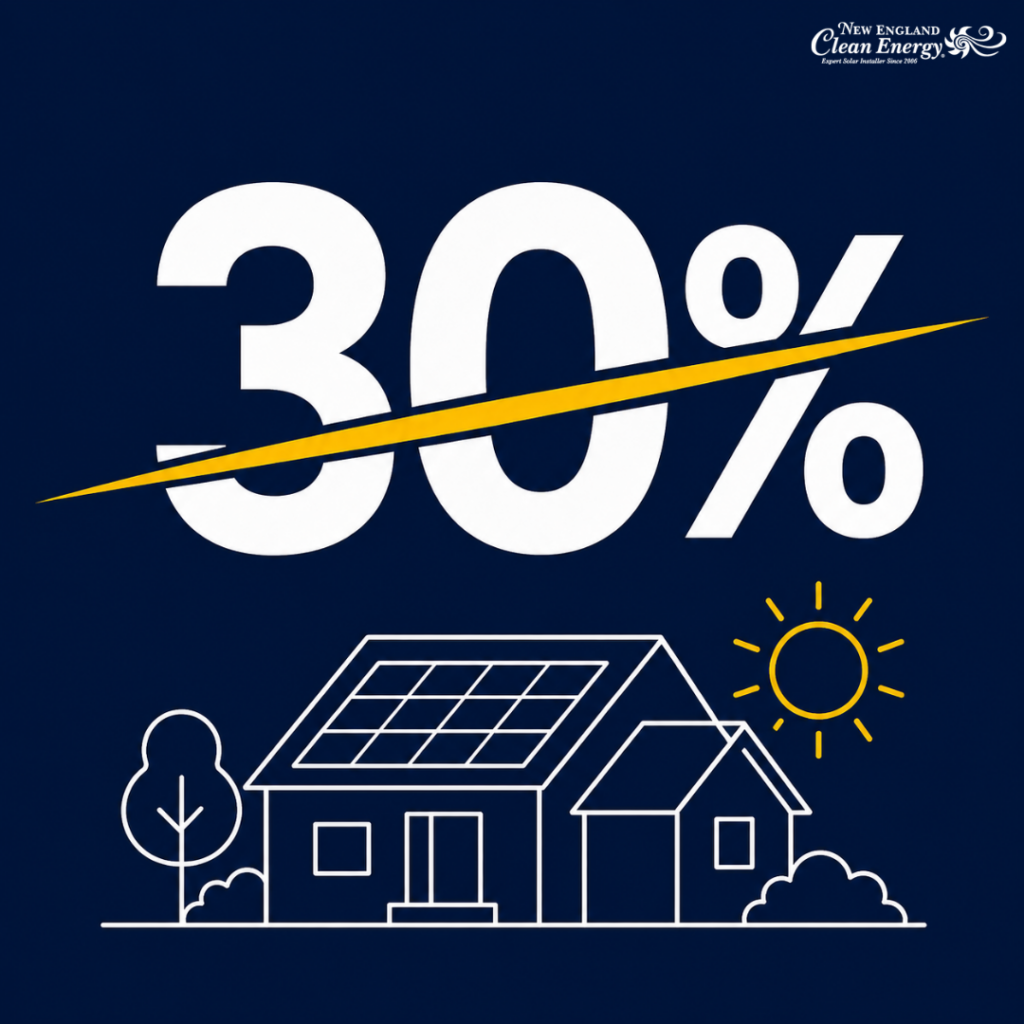
Until the end of 2025, eligible homeowners purchasing a solar energy system could potentially claim the federal Residential Clean Energy Credit, commonly referred to as the federal solar tax credit.
For qualifying systems, that credit was worth 30% of eligible costs.
For residential clean energy property installed after December 31, 2025, that credit is no longer available to homeowners.
That changes some of the financial calculations around purchasing solar, but it doesn’t eliminate the potential value of generating your own electricity.
Homeowners still have to consider electricity rates, available state and utility incentives, how much electricity their system could produce, financing costs, and how long they expect to remain in their home.
And now there’s another important question: What’s the best way to pay for the system?
Option 1: Paying Cash for Solar
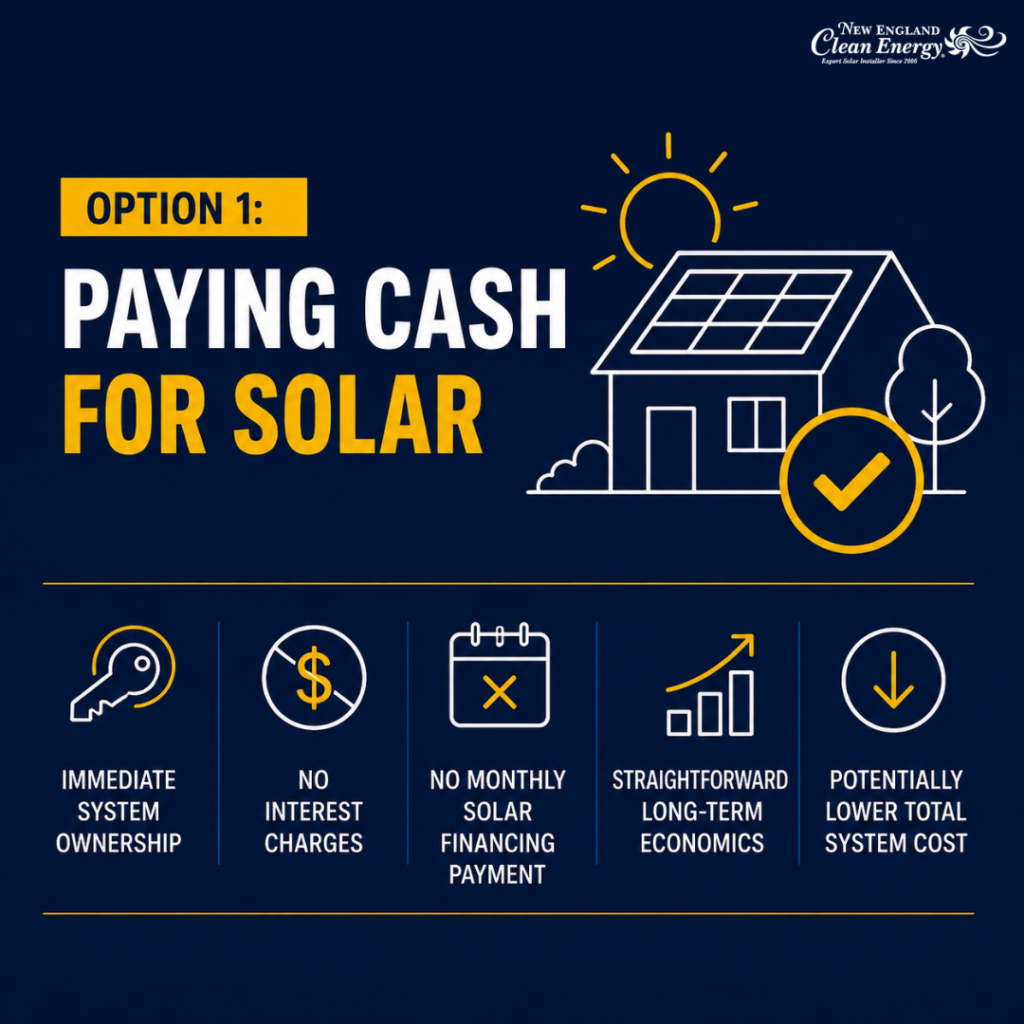
If you have the available funds, purchasing a solar system outright remains one of the simplest ways to go solar.
You own the equipment from the beginning, don’t have monthly loan payments, and don’t pay interest or other financing costs.
Advantages of Paying Cash
- Immediate system ownership
- No interest charges
- No monthly solar financing payment
- Straightforward long-term economics
- Potentially lower total system cost compared with financing
The obvious drawback is the upfront cost.
Solar is a significant home investment, and without the former federal residential tax credit to offset a portion of eligible costs, homeowners purchasing in 2026 need to evaluate the full purchase price differently than they might have a few years ago.
For homeowners with sufficient cash who prioritize ownership and minimizing financing costs, however, an outright purchase can still be an attractive option.
Option 2: Financing Solar With a Loan
You don’t necessarily need enough cash to purchase an entire solar system upfront.
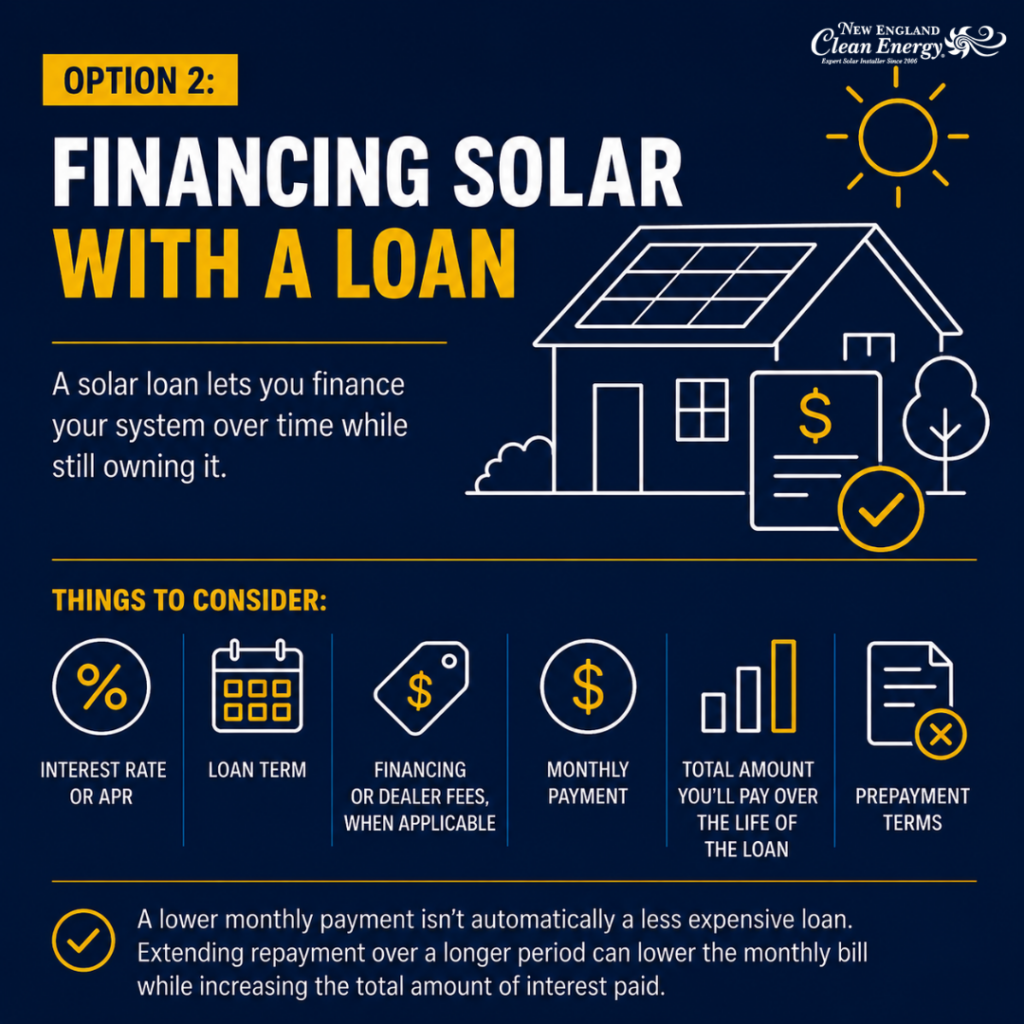
A solar loan allows you to finance the purchase over time while still owning the system.
For many homeowners, that makes solar much more accessible.
But when comparing solar loans, don’t look only at the monthly payment.
Consider:
- Interest rate or APR
- Loan term
- Financing or dealer fees, when applicable
- Monthly payment
- Total amount you’ll pay over the life of the loan
- Prepayment terms
A lower monthly payment isn’t automatically a less expensive loan. Extending repayment over a longer period, for example, can lower the monthly bill while increasing the total amount of interest paid.
Without the former federal residential solar tax credit, understanding the total cost of financing becomes particularly important.
If immediate ownership is important to you but paying the entire cost upfront isn’t practical, a solar loan may still provide a good middle ground.
Option 3: Propel — A Different Path Toward Solar Ownership
The end of the homeowner federal solar tax credit has also created a reason to look at newer ways of financing residential solar.
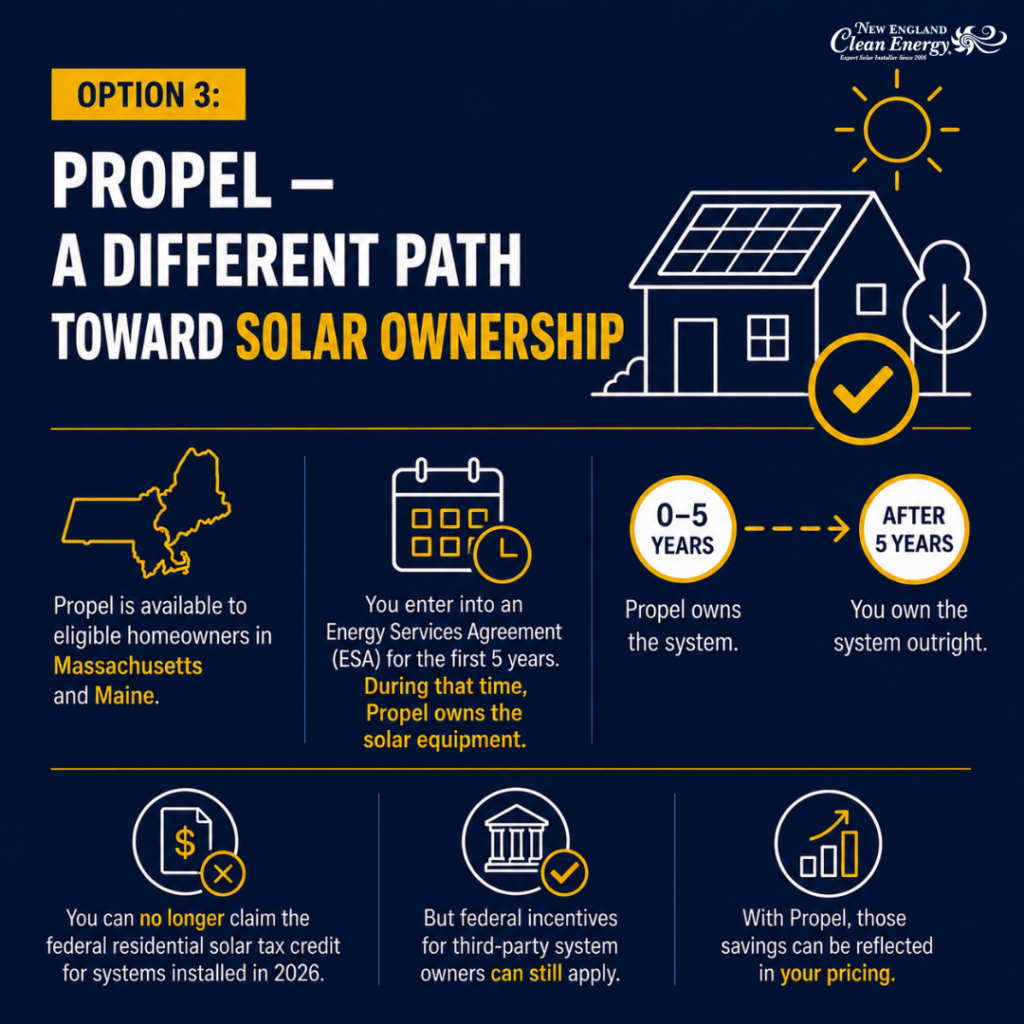
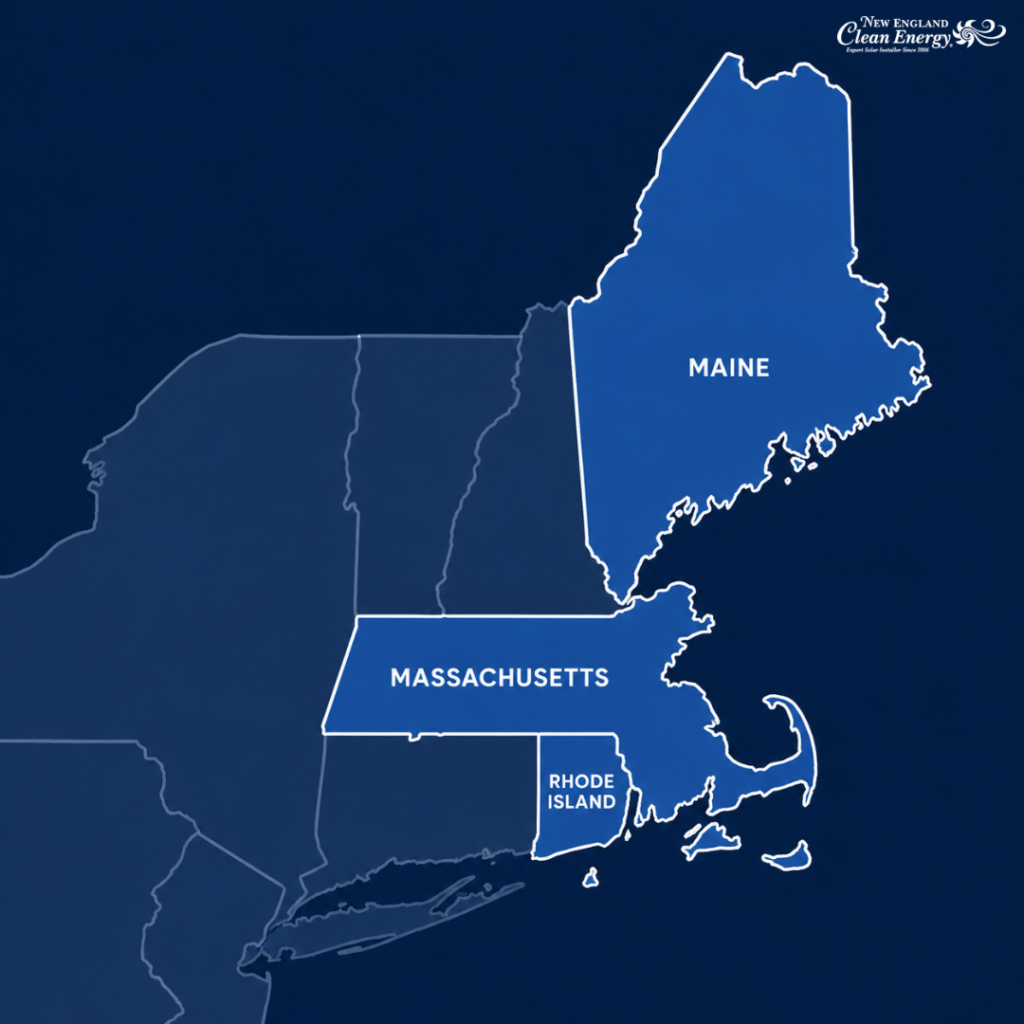
One of those options is Propel, which New England Clean Energy currently offers to eligible homeowners in Massachusetts and Maine.
Propel is different from both a traditional solar loan and a traditional long-term lease.
Instead of purchasing the system immediately, the homeowner enters into an Energy Services Agreement, or ESA, for the first five years. During that initial period, Propel owns the solar equipment.
That ownership structure matters.
While homeowners can no longer claim the former federal residential solar tax credit for new systems installed in 2026, federal incentives available to qualifying third-party system owners can still influence the economics of certain solar offerings.
With Propel, those economics can be reflected in the customer’s pricing.
An Important Distinction
The homeowner is not personally claiming the federal solar tax credit through Propel.
Instead, Propel owns the system during the initial ESA period. Applicable federal tax benefits available to the system owner can therefore be incorporated into the economics of the program.
That’s an important distinction when comparing Propel with purchasing a system directly in 2026.
Propel is designed to provide little or no upfront cost while still offering homeowners a clear path toward eventually owning their solar energy system.
For someone who wants to avoid a large upfront purchase but doesn’t necessarily want the long-term third-party ownership associated with a traditional solar lease, that combination can make Propel worth considering.
Propel is currently available through New England Clean Energy to eligible homeowners in Massachusetts, Rhode Island, and Maine.
Want to understand the program in more detail? Read our blog, “Propel Is Now Available in Massachusetts: A New Way to Go Solar Without the Upfront Cost,” for a closer look at how Propel works, its initial five-year ESA period, and the path toward system ownership.
Option 4: A Traditional Solar Lease or PPA
Leases and power purchase agreements offer another way to install solar without purchasing the equipment upfront.
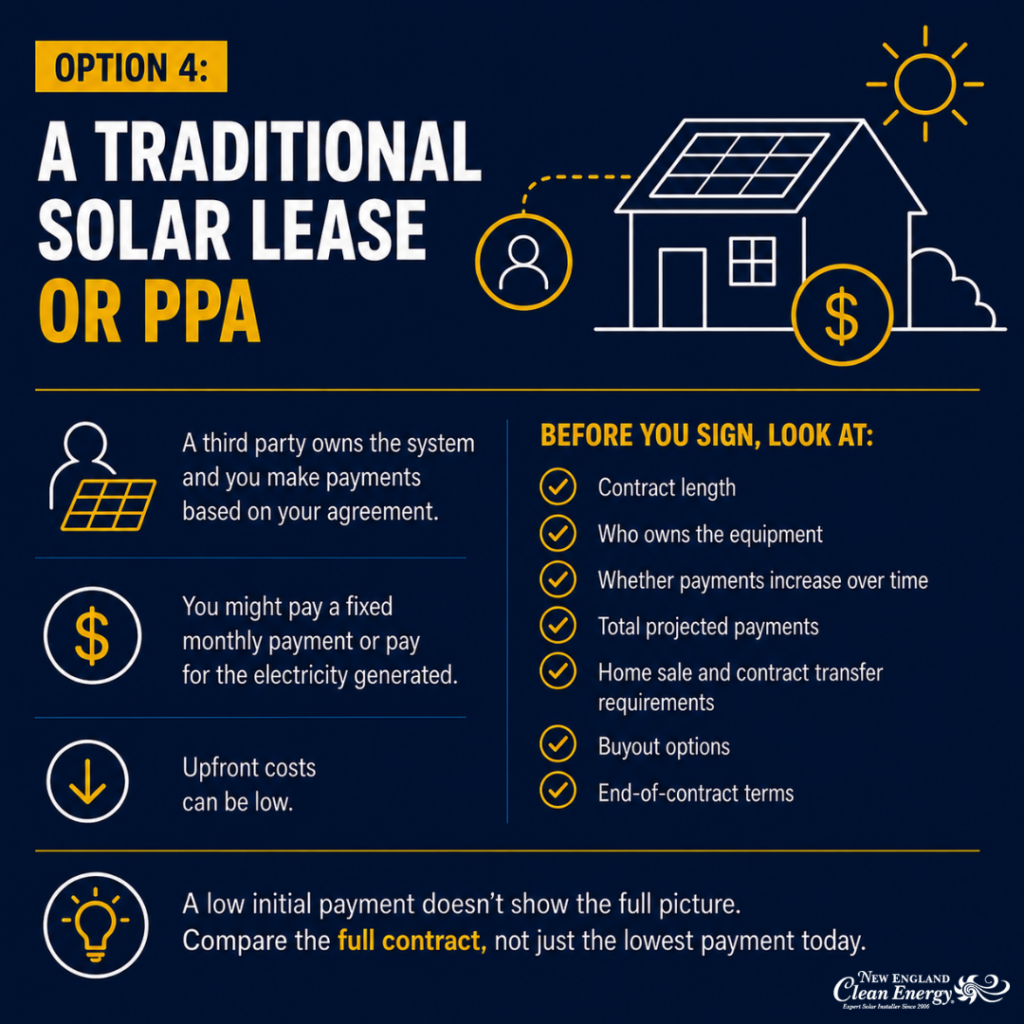
With these arrangements, a third party typically owns the solar system while you make payments according to the terms of your agreement.
Depending on the structure, you might pay a fixed lease payment or pay for the electricity the system generates. The appeal is straightforward: upfront costs can be low.
But it’s important to understand what you’re agreeing to over the long term.
Before signing a lease or PPA, look carefully at:
- Contract length
- Who owns the equipment
- Whether payments increase over time
- Total projected payments
- Home sale and contract transfer requirements
- Buyout options
- End-of-contract terms
A low initial payment doesn’t necessarily tell you what an agreement will cost over its entire lifetime.
That’s why we recommend comparing the full contract, rather than simply choosing whichever option produces the lowest payment today.
How Do the Different Ways to Pay for Solar Compare?
Here’s a simplified look at the major differences:
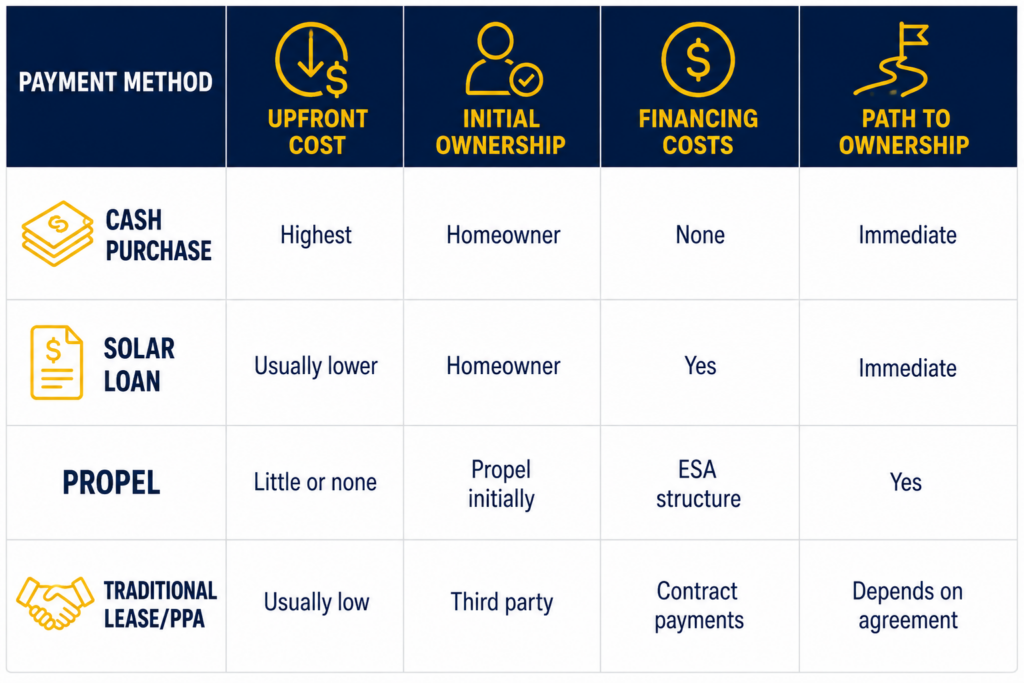
There isn’t one payment method that’s automatically best for every homeowner.
The right comparison is about much more than upfront cost.
So, What’s the Cheapest Way to Go Solar in 2026?

It depends.
If you have the available cash and want to minimize financing costs, purchasing your system outright may provide the simplest long-term economics.
If you want to own your system immediately but prefer to spread the cost over time, a solar loan could make more sense.
If minimizing upfront costs is a priority but you still want a defined path toward ownership, Propel may deserve a closer look—especially for eligible homeowners in Massachusetts and Maine.
And if you’re considering a traditional lease or PPA, make sure you understand the full contract and long-term costs before making your decision.
Most importantly, don’t evaluate a solar proposal based solely on the monthly payment.
Look at the Lifetime Economics of Your Solar System
Solar is designed to be a long-term investment.
The best financing option isn’t necessarily the one that costs the least in month one. It’s the one that makes sense when you consider the entire life of the system.
Before deciding how to pay for solar, ask:
How much will I pay upfront?
How much will I pay over the full financing or agreement term?
Who owns the system, and when?
Do my payments increase over time?
What happens if I sell my home?
What incentives are available to me or incorporated into the financing structure?
How does my projected solar cost compare with what I could otherwise spend on electricity?
Those questions become even more important now that the federal Residential Clean Energy Credit is no longer available for new homeowner-owned systems.
The Federal Tax Credit Ended. Your Solar Options Didn’t.
The solar financing landscape changed in 2026, but homeowners still have options.
Cash purchases, solar loans, Propel, and third-party leases or PPAs all approach the cost of solar differently. Understanding those differences can help you make a decision based on your finances and long-term goals rather than simply choosing the lowest advertised monthly payment.
For eligible homeowners in Massachusetts and Maine, Propel also introduces another possibility: little or no upfront cost, an initial five-year Energy Services Agreement, and a path toward system ownership.
Not sure which option makes the most sense for your home?
New England Clean Energy can help you compare your solar options based on your energy use, property, budget, and long-term goals.
Call 877-886-8867 or schedule a free consultation today to start exploring your options.
If you liked this article, you may also like:
So, Your Solar Installer Went Out of Business? Here’s Who to Call
High Cooling Bills This Summer? A Heat Pump Could Be the Upgrade You Need
Propel Is Now Available in Massachusetts: A New Way to Go Solar After the Federal Tax Credit