
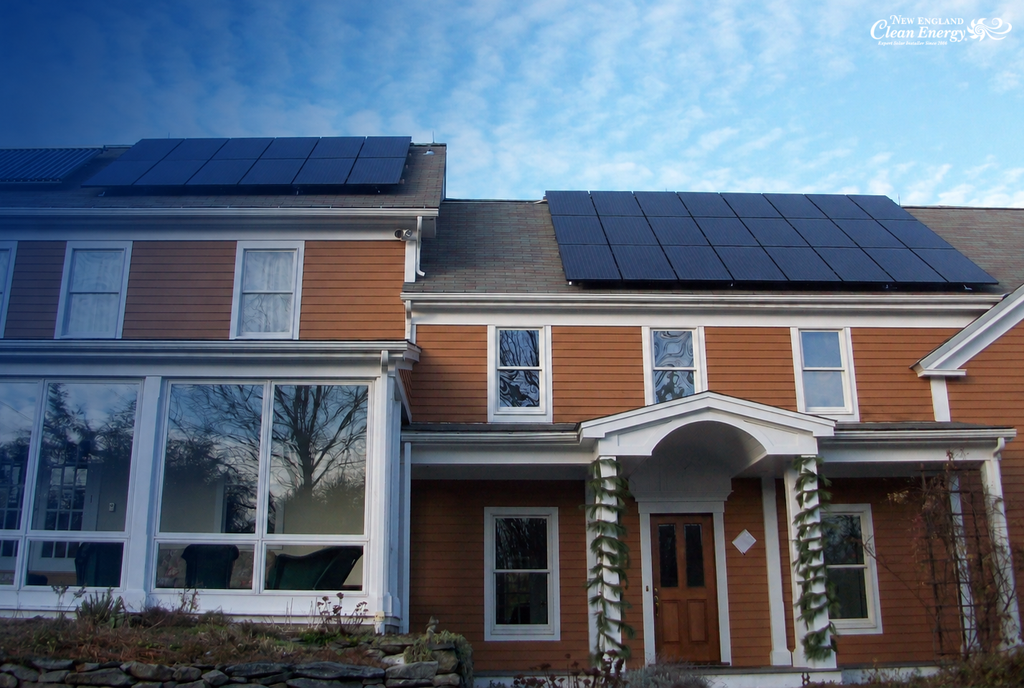
Going solar starts with understanding your home.
Today, solar companies can learn quite a bit about a property before ever stepping foot on-site. Satellite imagery, utility usage, roof data, and other digital tools can help determine whether solar may be a good fit and create a preliminary system design.
But there are some things you simply can’t confirm from a computer screen.
That’s where a solar site visit comes in.
At New England Clean Energy, a site visit gives our team a closer look at your home, roof, electrical system, surrounding property, and energy goals so we can make sure the system we recommend is designed for the real conditions at your home — not just what we can see from satellite imagery.
Here’s what you can expect.
Before We Visit Your Home
A lot of the initial work can happen remotely.
Before scheduling a solar site visit, we can typically review your property using satellite imagery and other available data. We’ll also want to look at a recent electric bill so we can better understand how much electricity your household currently uses.
This gives us a starting point for determining whether solar makes sense for your property and what a potential system might look like.
The site visit allows us to verify those assumptions.
We’ll Talk About Your Energy Goals
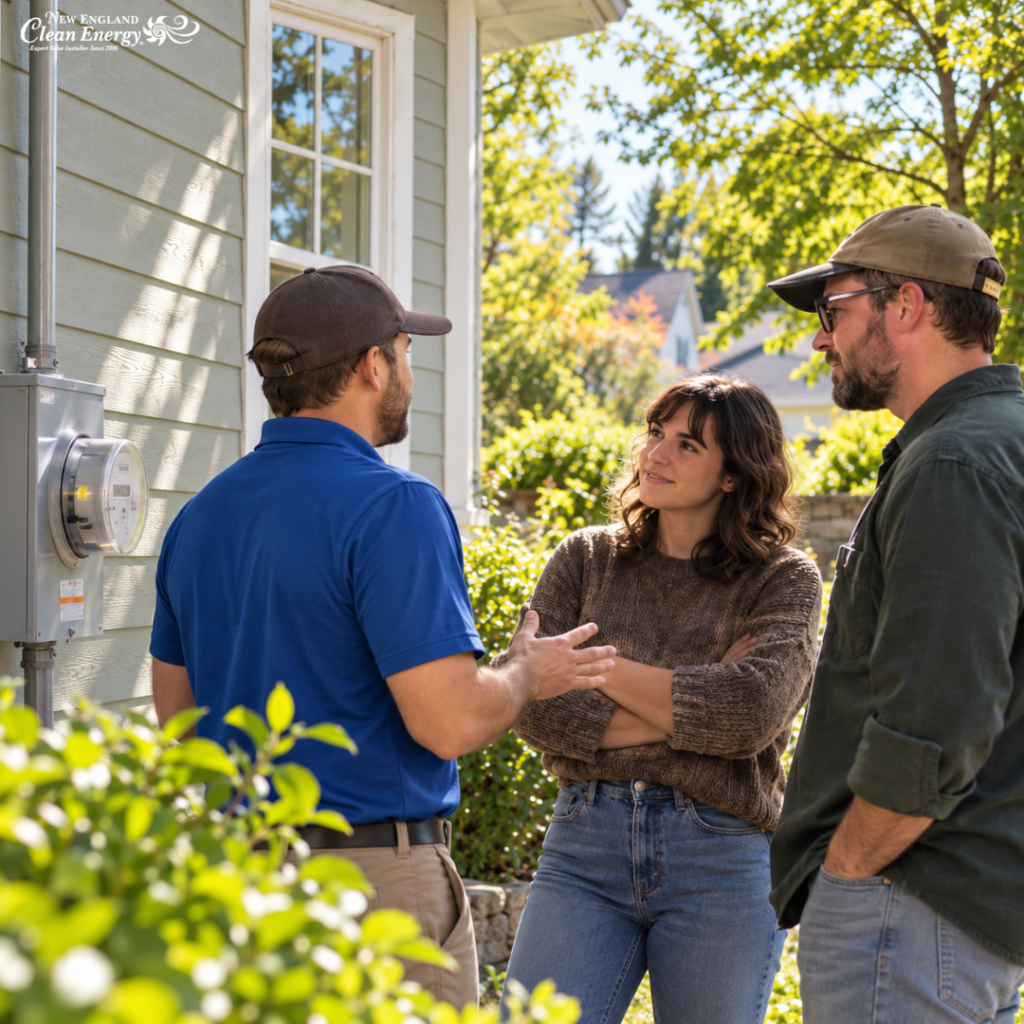
A good solar design isn’t based on your roof alone. It should reflect how you currently use electricity, how that usage may change in the future, and how you want the finished system to look on your home.
We’ll often start by reviewing a recent electric bill with you. This helps establish your current electricity usage and utility rates, giving us a clearer baseline for sizing your system.
From there, we may talk about questions like:
- Are you primarily interested in lowering your electricity costs?
- Are you considering battery storage?
- Do you own or plan to purchase an electric vehicle?
- Are you planning to install heat pumps or switch other equipment from fossil fuels to electricity?
- Are you expecting your household electricity use to increase?
- Do you have preferences about where panels, electrical equipment, or conduit runs are located?
Appearance matters, too. Many homeowners have strong preferences about where panels are placed, where equipment is installed, and how visible conduit runs will be. The site visit gives us a chance to talk through those details and look for a design that performs well while also looking good on your home.
Maybe you’re planning to purchase an EV, add heat pumps, or install battery backup for outages. Those future energy needs can significantly change how much electricity your home uses.
Understanding both your current usage and your future plans helps us design and size a solar system that makes sense for your home now and in the years ahead.
We’ll Take a Closer Look at Your Roof
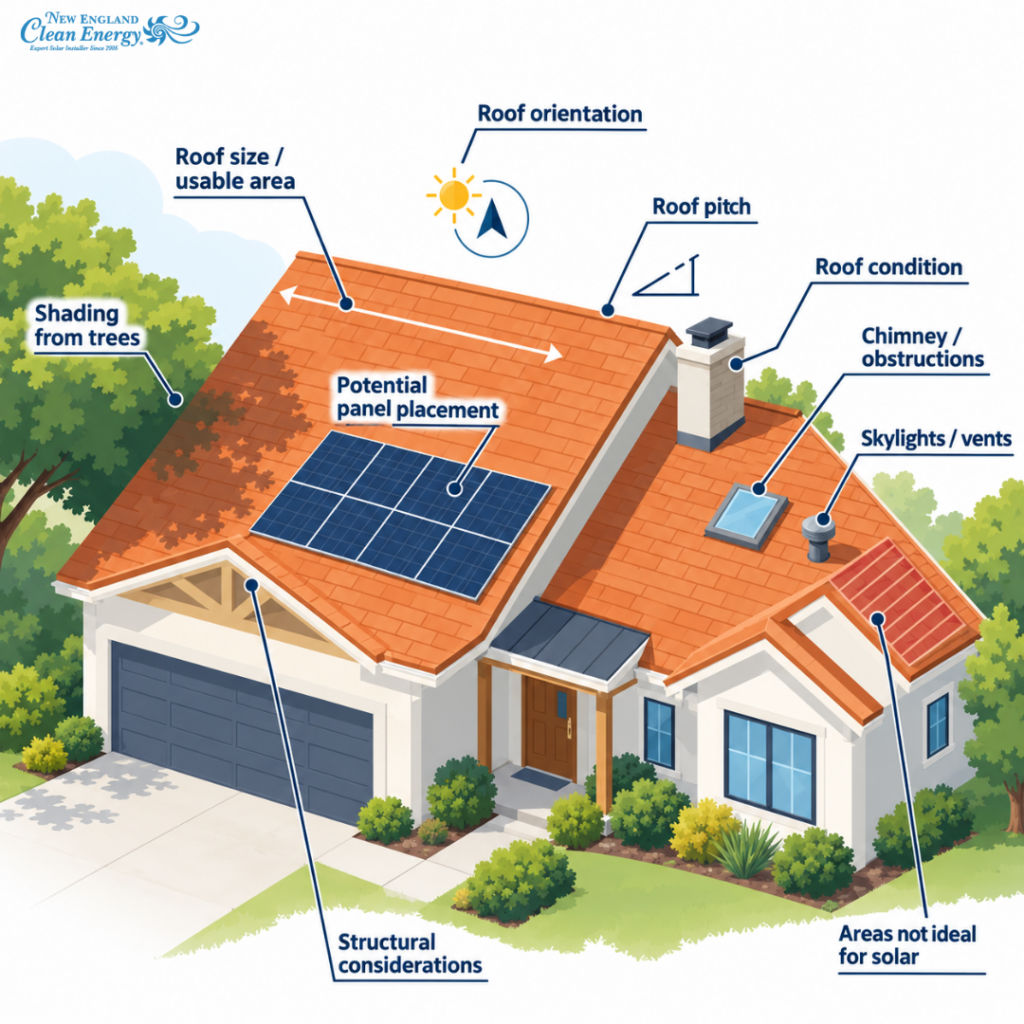
Satellite imagery is incredibly useful, but a solar site visit gives us information that may not be obvious remotely.
Depending on your property, our team may evaluate things like:
- Roof size and available installation area
- Roof orientation and pitch
- Roof condition
- Shading from nearby trees, buildings, or other obstructions
- Potential panel placement
- Structural considerations
- Areas that may not be suitable for solar equipment
If your roof is nearing the end of its useful life, that’s also something you’ll want to address before installing a system that could remain there for decades.
And if rooftop solar isn’t the best option for your property, we can discuss whether another configuration, such as a ground-mounted system, may make sense.
We’ll Evaluate Your Electrical System
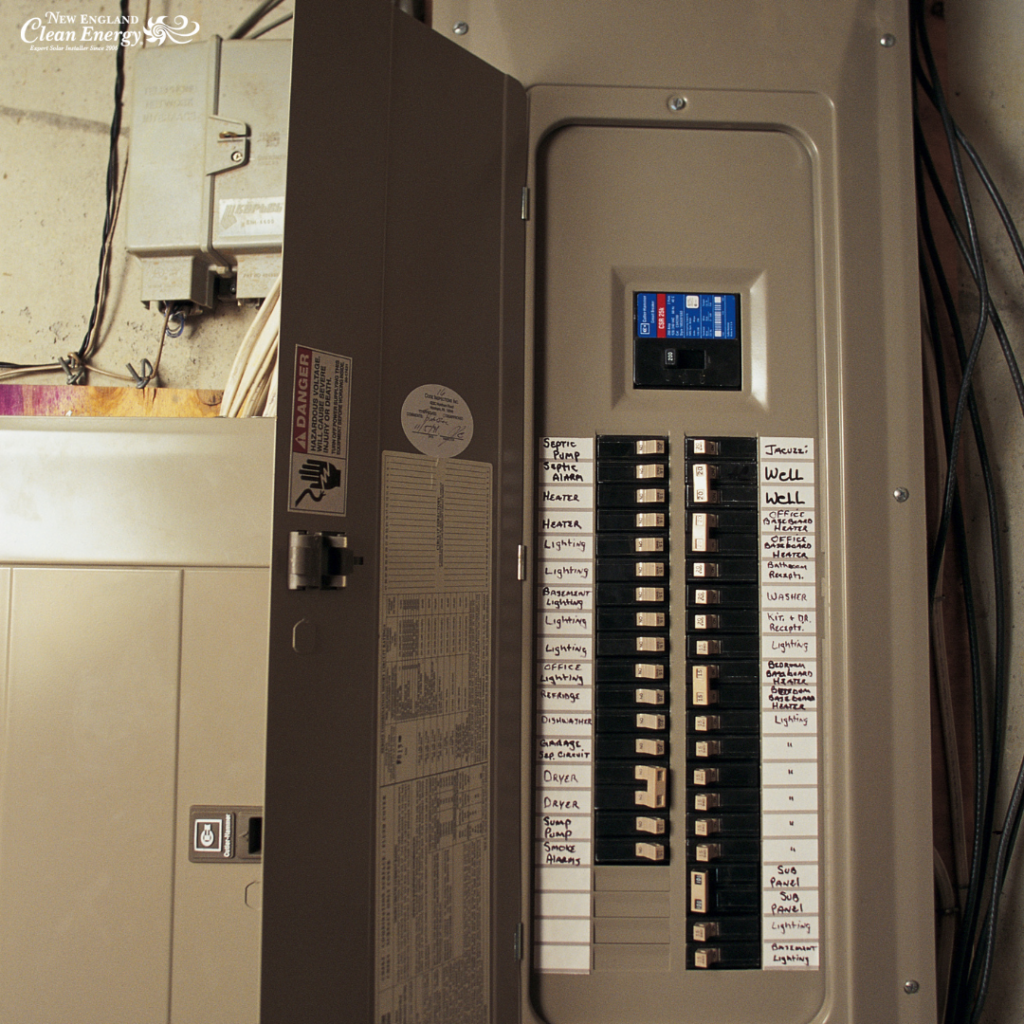
Solar panels are only one part of a solar installation. Our team also needs to understand how the system will connect to your home’s existing electrical infrastructure.
During the site assessment, we may inspect your electrical panel and other relevant equipment, identify potential locations for solar components, and look for any conditions that could affect the installation.
In most cases, the existing electrical system does not create major limitations for solar. Because a solar system is generating electricity rather than adding a new electrical load to the home, a service upgrade or extra breaker space is rarely required solely for the installation.
If you’re considering battery storage, we’ll also look at potential locations for the equipment and how it could integrate with your home’s electrical system.
The goal is to understand the existing setup early so the final design accounts for the practical details of connecting your solar system safely and efficiently.
We’ll Take Measurements, Photos, and Confirm Site Conditions
The goal of the solar site visit is to gather enough accurate information to properly design and plan your project.
That may include taking measurements, photographing key areas of the property, documenting existing equipment, noting shading or site conditions, and confirming potential locations for panels and other system components.
The process is straightforward and typically doesn’t require any specialized equipment beyond basic tools like a tape measure.
These details help reduce surprises later and give our design and installation teams reliable information gathered directly from your property.
Do You Need to Prepare for a Solar Site Visit?
Not much.
It helps to make sure we can access the areas of your home we may need to inspect, particularly your electrical panel, attic, and any other relevant equipment.
Attic access is especially helpful because it allows us to gather information about your roof structure, including rafter measurements. We can then share those details with our structural engineer, who can determine whether the roof meets current structural requirements for solar or whether any reinforcing work may be needed before installation. It also gives homeowners added peace of mind that their roof can safely support the new system.
You should also come prepared with questions. If there’s something unusual about your home, a future renovation you’re planning, concerns about where equipment will go, or anything else you think could affect the project, let us know.
The more information we have during the site visit, the better we can design the system around your home and your needs.
What Happens After the Site Visit?
Once we’ve gathered the information we need, our team can use it to develop or refine the design and proposal for your home.
Your proposal can then account for factors such as system size, expected electricity production, equipment, project cost, and available financing or incentive options.
And because incentives, electricity rates, and financing options can change, we’ll walk you through the options available at the time of your project rather than relying on outdated assumptions.
If you decide to move forward, the project enters the next stages of design, permitting, utility coordination, installation, inspection, and ultimately permission to operate.
A Site Visit Is About Getting the Details Right
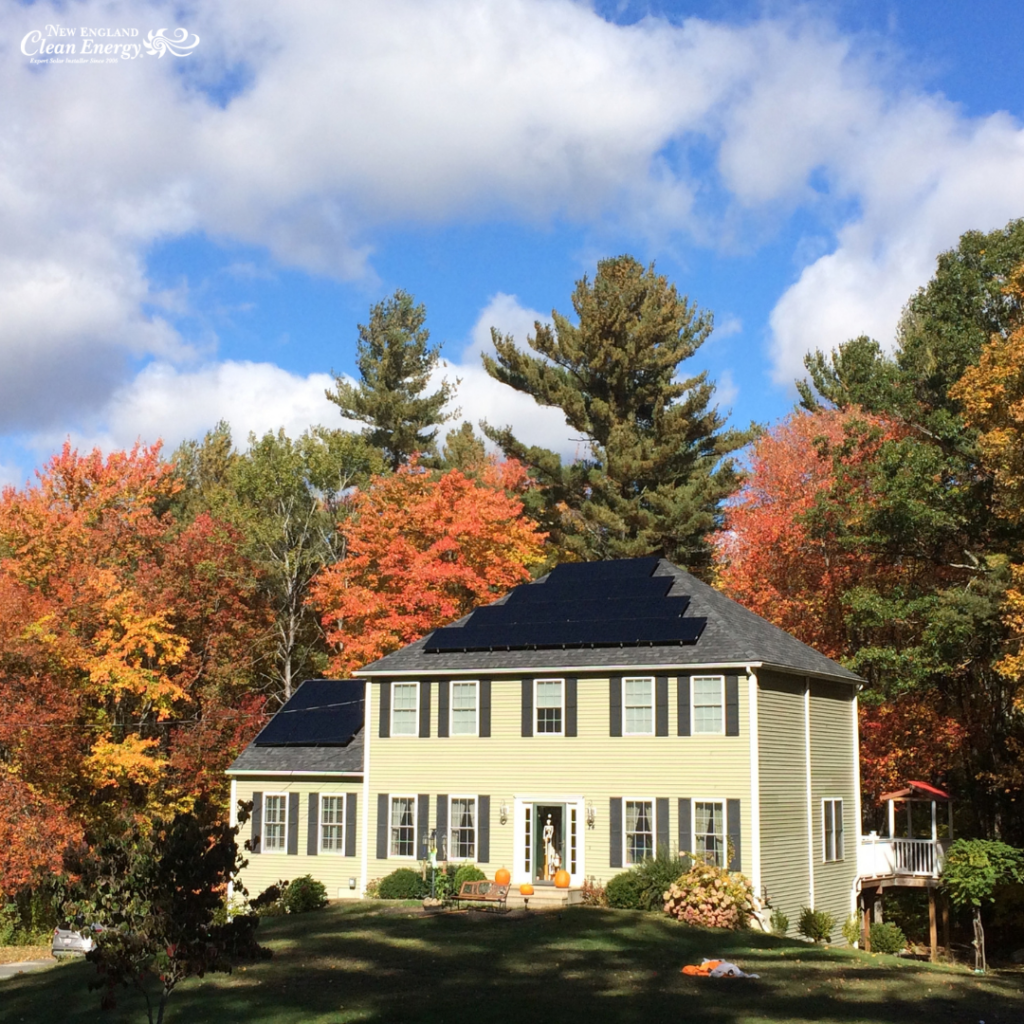
Installing solar is a long-term investment in your home, and every property is different.
An on-site assessment gives us a chance to verify what we’ve learned remotely, identify potential challenges early, answer your questions, and make sure the system we design fits your property and your goals.
At New England Clean Energy, we’ve been designing and installing solar systems throughout New England for more than 20 years. Our approach is consultative and low-pressure: the goal of a site visit isn’t to rush you into a decision. It’s to give both you and our team the information needed to determine the right next step.
Ready to find out whether solar is a good fit for your home?
Schedule a free consultation with New England Clean Energy or call 877-886-8867.
If you liked this article, you may also like:
Own More Than One Home? Here’s Why Solar May Make Sense
Why Are You Getting a New Electric Meter? What Massachusetts Homeowners Should Know