
If you’re a homeowner in New England, you’ve likely felt the sting of rising electric bills. And if your electricity comes from an investor-owned utility (IOU) like Eversource, National Grid, Central Maine Power, or Rhode Island Energy the pain is probably worse.
Here’s the good news: solar is still the cheapest way to power your home—and its long-term financial benefits go well beyond your monthly bill. From boosting your home’s resale value to shielding you from future rate hikes, solar gives you more equity, more savings, and more control.
Let’s break it down.
The Federal Investment Tax Credit Isn’t Everything
Before we look at all the other benefits to going solar, let’s start with the Federal Investment Tax Credit (ITC). After all, it is now set to step down at the end of 2025 and many people are really focused on it. And that concern makes sense—after all, the 30% credit can reduce the cost of a $30,000 system to $21,000.
But here’s the bigger picture: solar systems are long-term assets. Most panels come with 25-year warranties, and many will last well beyond that. More distressingly, electricity rates are forecast to increase as much as 10% per year over the years to come (and have been increasing at over 7% per year over the last 5 years). The result is that over those decades of increasing savings your solar system will save you tens of thousands of dollars. So, in dollar and cents terms, for a typical system with decent sun exposure, the ITC may only account for less than 6% of the total lifetime benefit. So, while the ITC is a great bonus to get you started, it’s ultimately only a small slice of the total benefit pie.
Solar Is the Only Source of Electricity with Free Fuel
Fossil fuel–based electricity? Prices go up. Solar energy? The sun is free—and always will be. Once installed, your solar system generates power at a fixed cost for 25+ years. That means every kilowatt-hour you produce shields you from unpredictable utility rate increases. In New England, where electric rates are among the highest in the U.S., that stability is a game-changer. With a properly sized, customer-owned solar system, you start saving from day one—and those savings only grow with time. 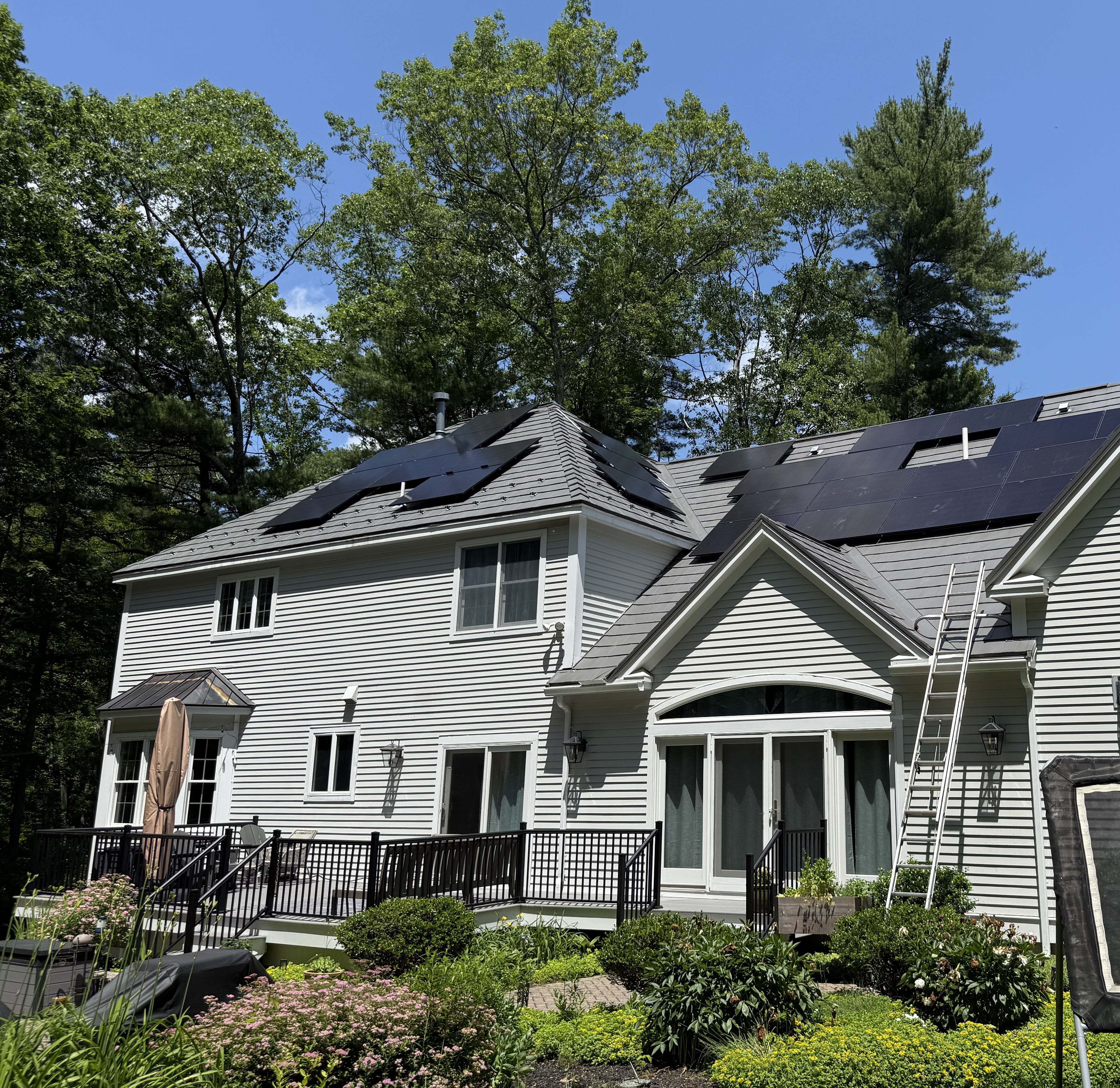
Solar Adds Real Value to Your Home
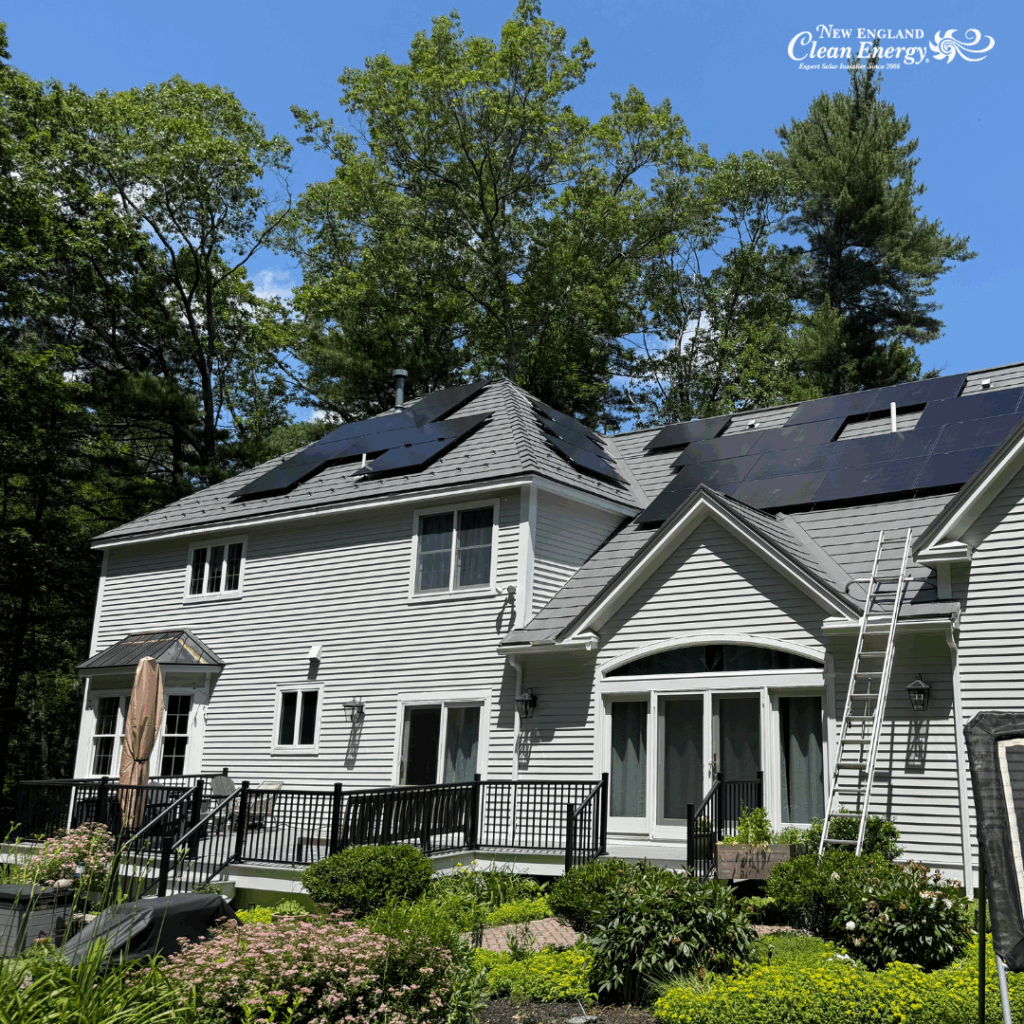
Beyond monthly savings, solar also increases your home’s resale value—and in New England, where buyers are energy-aware, that matters.
Most New England states also exempt the value of solar energy systems from property tax assessments. So, while your home may increase in market value, your property taxes likely won’t. For example:
- Massachusetts law exempts solar systems from property tax for 20 years.
- Rhode Island has a similar exemption.
- New Hampshire allows towns to decide, and many do offer a full or partial exemption.
- Maine also has policies supporting solar-friendly tax treatment.
Always check with your town or tax assessor for the latest details, but generally speaking, solar won’t raise your property taxes in most of New England.
What the Data Says: Solar Increases Home Value
National studies back this up:
- Zillow found that homes with solar sell for an average of 4.1% more than similar homes without solar.
- Lawrence Berkeley National Laboratory found that for every $1 in annual electricity savings, solar adds $3 to $4 in home value.
You can read more in our blog: How Solar Panels Increase Home Value.
New England Homes with Solar Sell Faster—and Smarter
New England is one of the most solar-forward regions in the country. Many buyers are actively seeking energy-efficient homes. In a competitive real estate market, solar gives your home an edge. Even if you’re not planning to sell soon, your solar system builds equity, enhances your home’s appeal, and offers long-term peace of mind.
Why Ownership Matters
Here’s a key point: only customer-owned systems (either purchased outright or through a loan) add real value to your home. If your system is leased or owned by a third party, it may not increase your home’s value—and could even complicate a future sale. That’s why New England Clean Energy only installs customer-owned systems. We want you to keep the incentives, enjoy the full financial return, and own your energy future.
The Bigger Picture: Solar vs. Utility Electricity
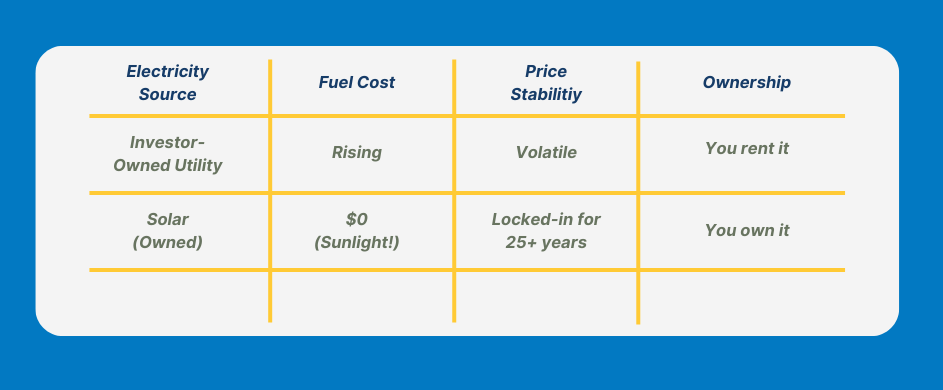
For more details, see our Solar vs. Utility Comparison Guide.
Final Thoughts: It’s About More Than Just Panels
Solar isn’t just a smart energy decision—it’s a smart financial move. In New England, where rates are high and incentives are still available, solar remains the most affordable, predictable, and equity-building way to power your home. And if you ever decide to sell? You’ll be glad you invested.
Ready to Learn What Solar Could Do for Your Home?
At New England Clean Energy, we’ll design a system tailored to your home, your roof, and your long-term goals. No pressure. Just real answers from local experts who care. Get your free solar quote today! Own your power. Own your home’s future.
If you liked this article, you may also like:
The True Timeline to Get Solar Installed in New England
Energy Independence: Why It Matters Now — And How Solar Can Help You Take Control